Writer of the week
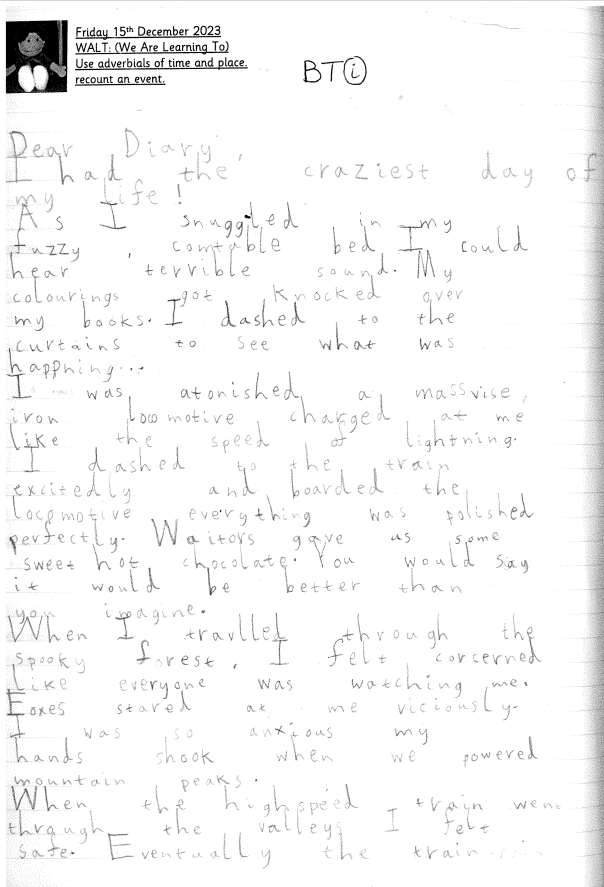
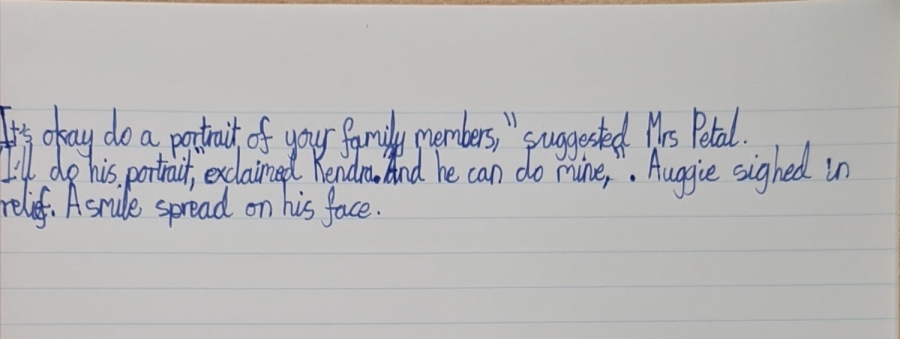
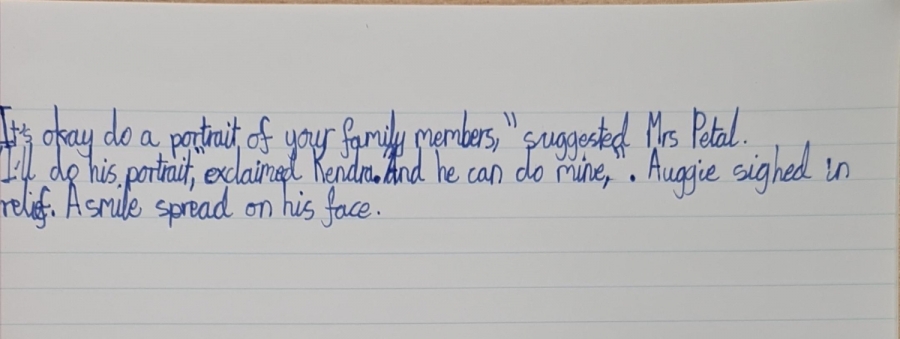
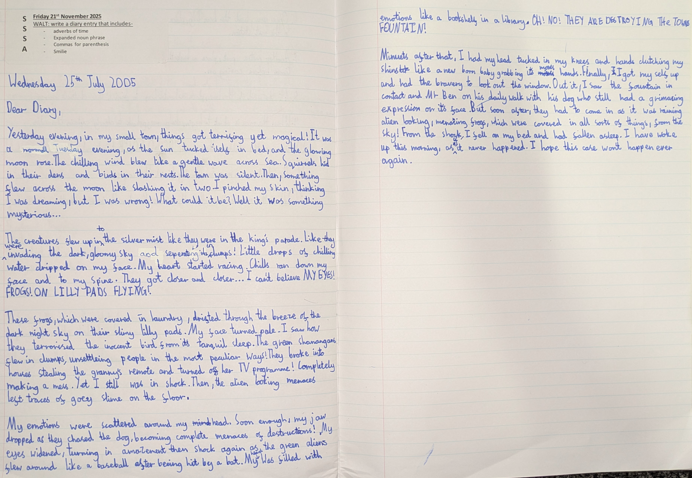
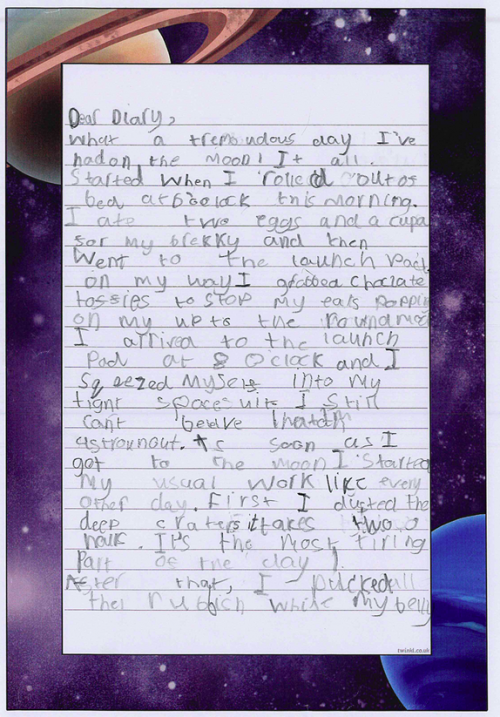
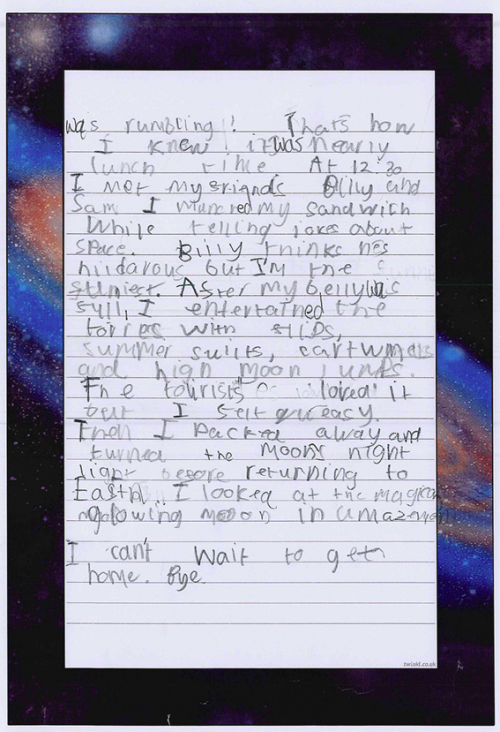
Writer of the week is Kaiden in Year 2 for his fantastic diary entry, writing in role as Bob - the main character in Man on the moon by Simon Bartram. Kaiden has used a fantastic authorial voice to get into character, as well as exclamation sentences, precise verbs and time adverbials and conjunctions to support cohesion. Well done Kaiden!
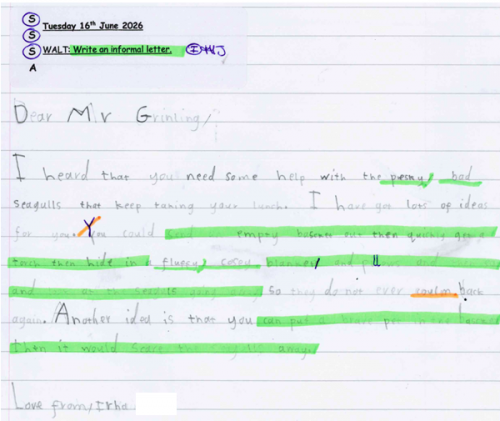
Writer of the week is Irha in Year 1 for her incidental write based on the book The Lighthouse Keeper's Lunch by Rhonda and Davis Armitage. We wrote informal letters to Mr Grinling in the story to offer ideas as to how to keep the seagulls from eating his lunch. Irha has written in correctly punctuated sentences, used expanded noun phrases to aid description and linked ideas with the conjunctions 'then', 'so' and 'because'. Excellent Irha - you are definitely ready for Year 2!
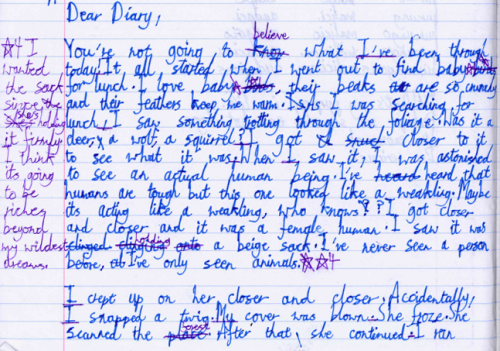
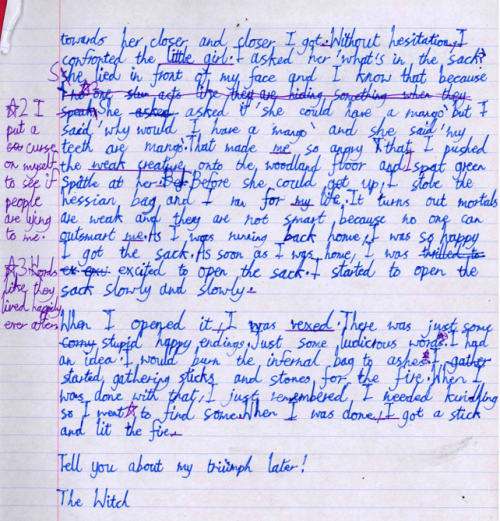
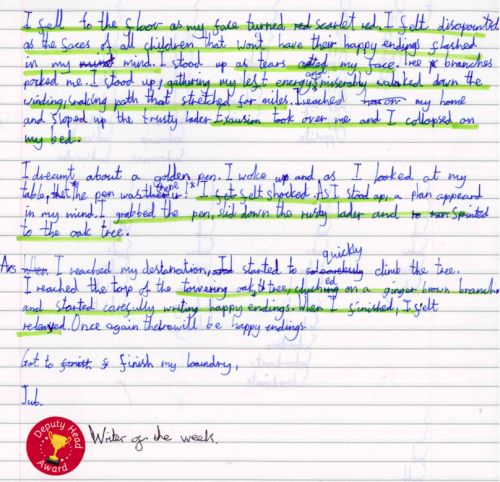
Writer of the week is Daniel in Year 4 for his diary entry in role as the witch based on the key text The Lost Happy Endings by Carol Ann Duffey. Daniel has used fronted adverbials; precise nouns, verbs and adjectives as well as short, sharp sentences for dramatic effect. An excellent diary entry Daniel! Well done.
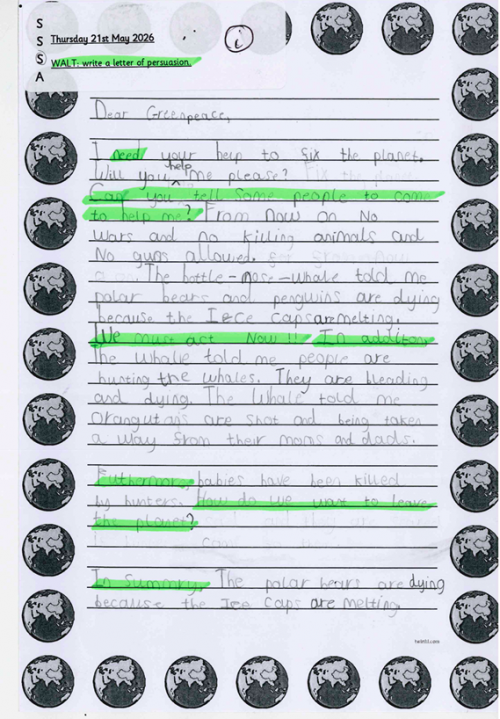
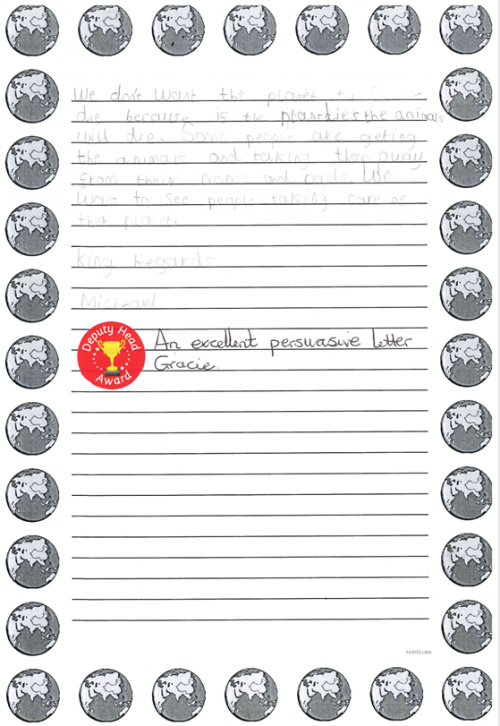
Writer of the week is Gracie in Year 3 for much improvement in her writing. Year 3 have been writing persuasive letters to Greenpeace based on their key text This morning I met a whale by Michael Morpurgo. Gracie has used emotive language, rhetorical questions, modal verbs and cohesive devices to structure her letter. Well done Gracie.
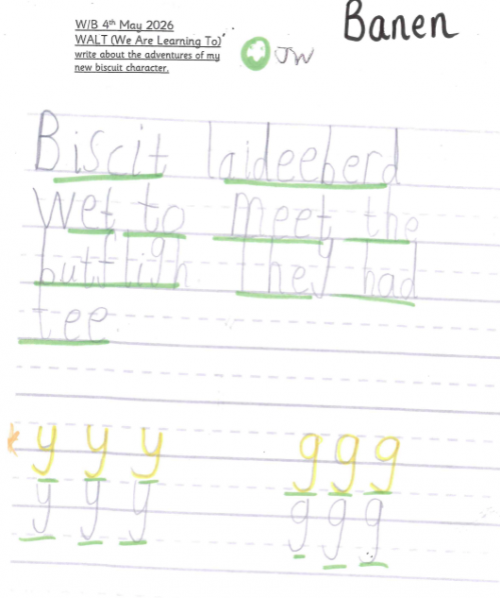
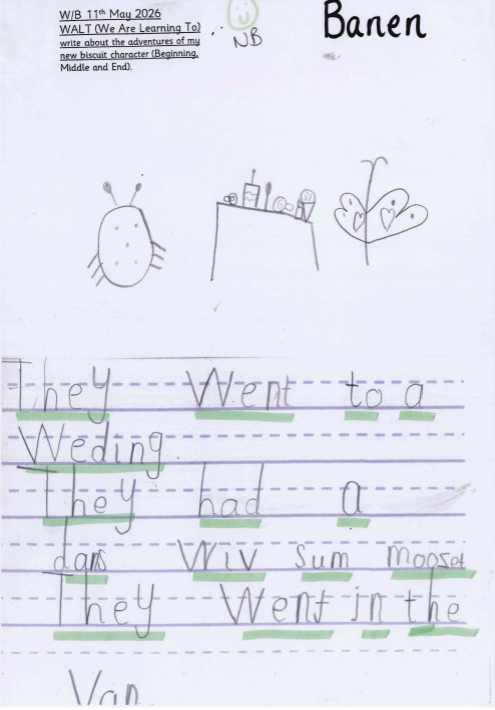
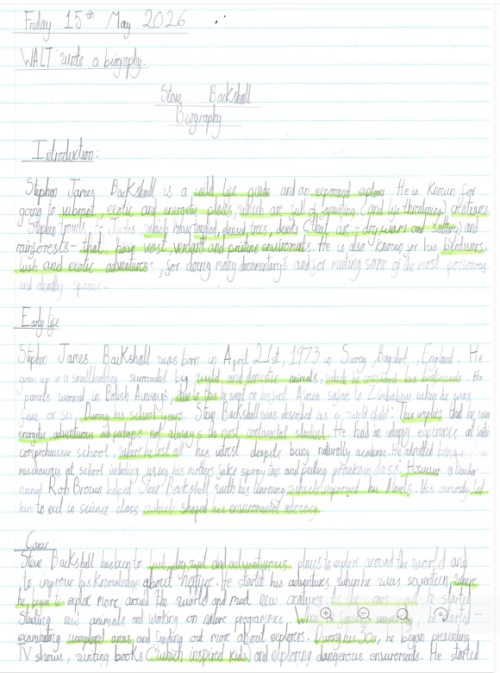
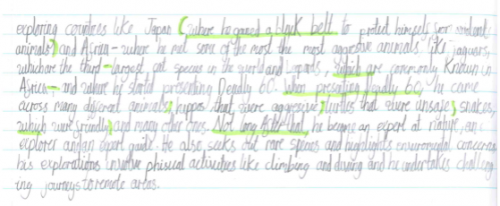
Writers of the week are Banen in Reception and Firdaus in Year 5.
Banen has innovated the story of Biscuit Bear, creating her own character and the adventure they go on. Banen shows excellent letter formation and sentence structure. She has used capital letters and full stops to demarcate sentences and has applied her phonics knowledge to spell.
Firdaus has written a biography on Steve Backshall linked to the Year 5 focus text of The Explorer by Katherine Rundell. Firdaus has used parenthesis and relative clauses to add extra detail, maintained a formal tone and chosen precise, subject specific vocabulary in her work. She has also organised her content into appropriate paragraphs to support cohesion.
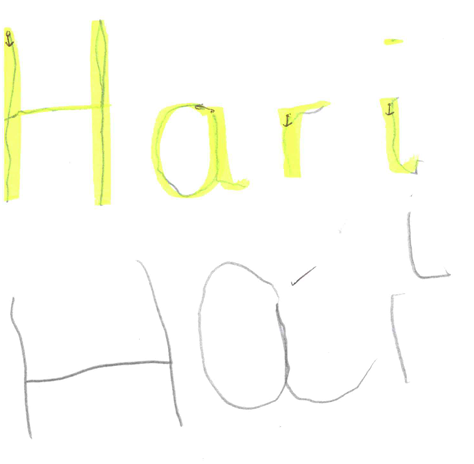
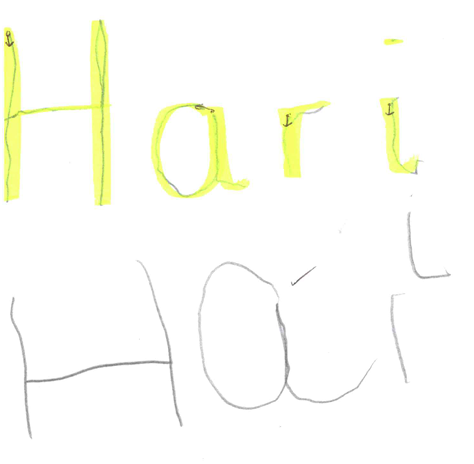
Writer of the week is Hari in Nursery for excellent letter formation when copying his name. This was Hari's first attempt and copied the letters confidently with a comfortable pencil grip. Well done Hari!
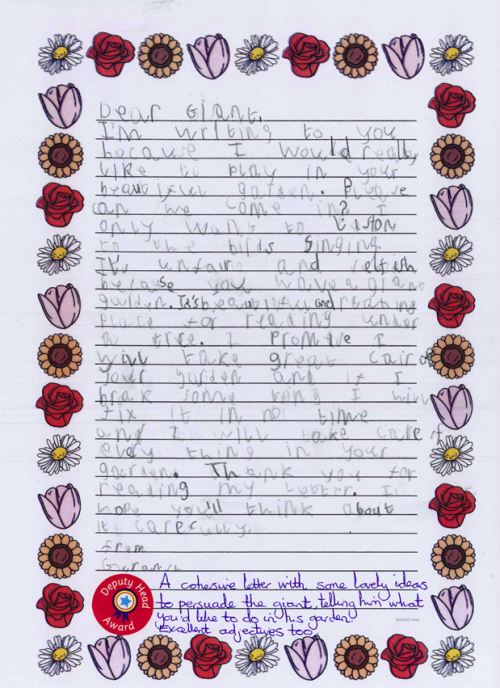
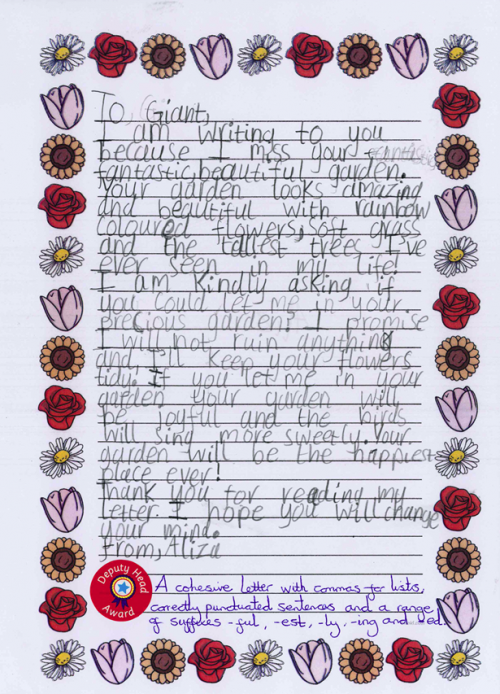
Writers of the week are Aliza and Guransh in Year 2 for their excellent letters to the giant in Oscar Wilde's book The Selfish Giant, asking him to let them play in his garden when he refuses to let them in. Both children have written cohesive letters. Aliza has used commas for lists, correctly punctuated sentences and a range of suffixes in her work. Guransh has used some lovely ideas to try and persuade the giant, telling him some of the things he'd like to do in his garden. Excellent Year 2 writing!
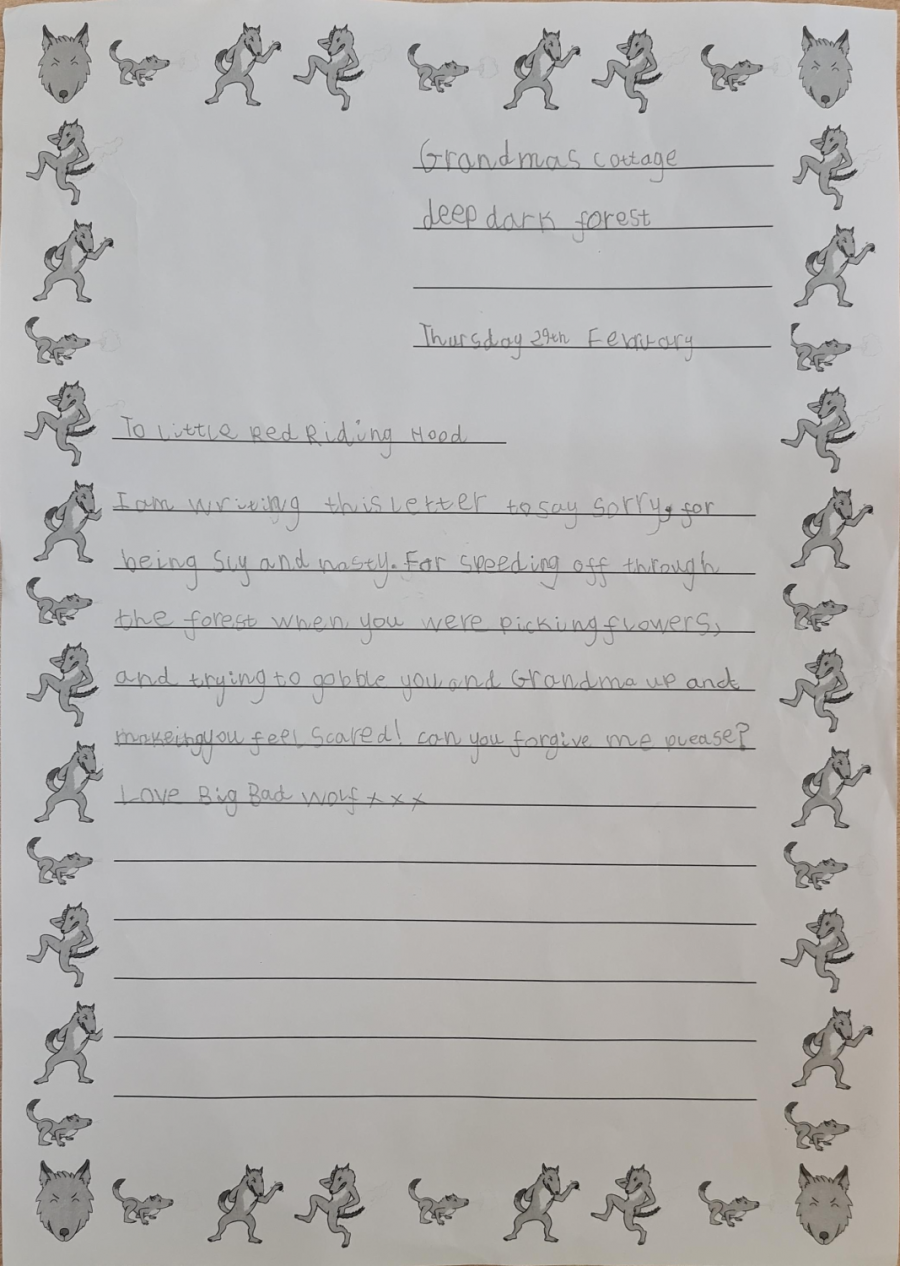
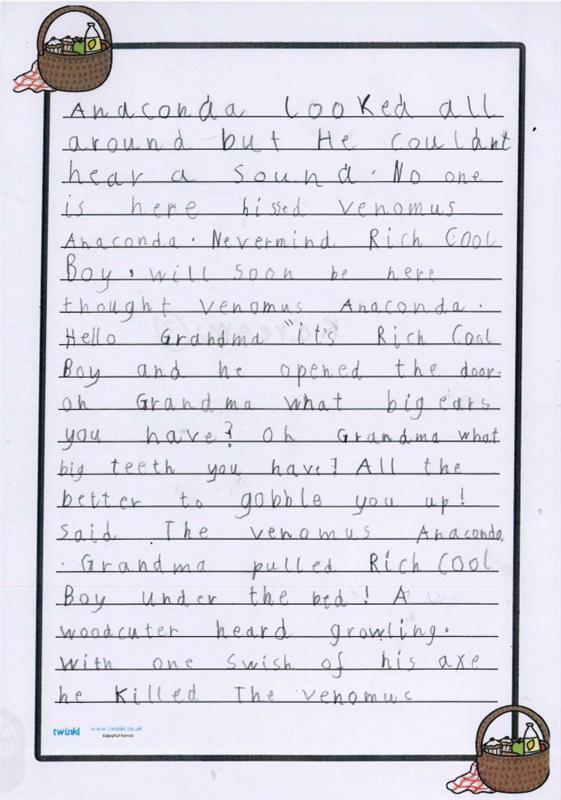
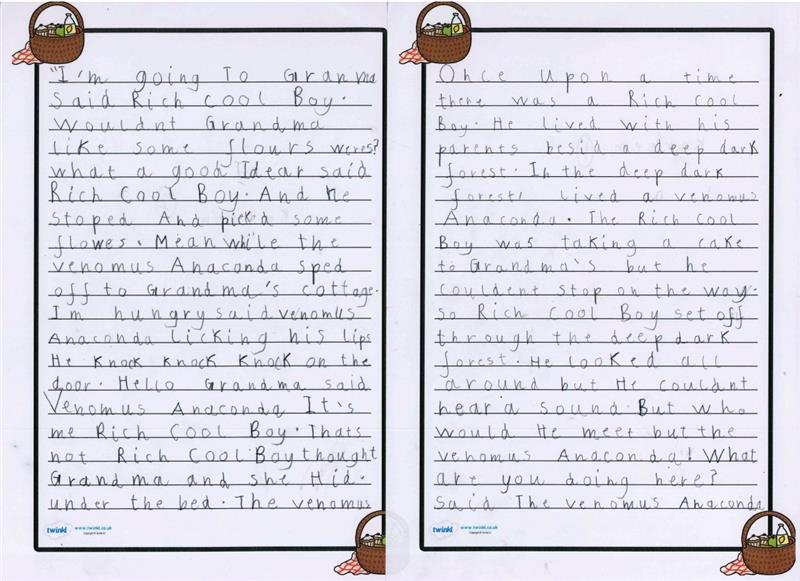
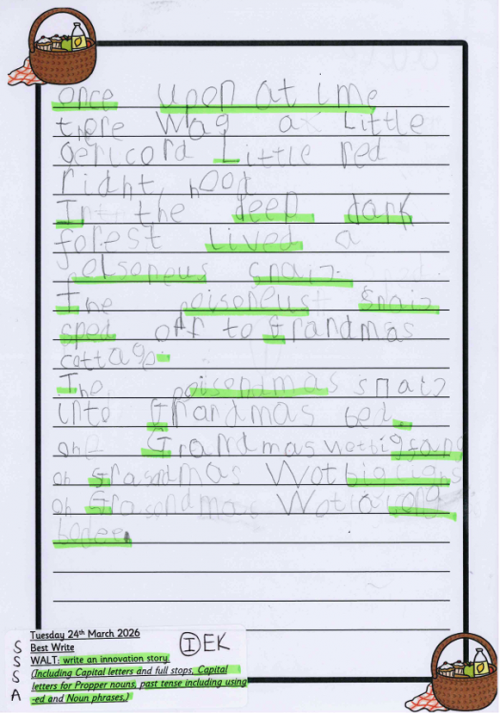
Writer of the week is Paulo in Year 1 for his innovation of Little Red Riding Hood. Paulo has used phonetically plausible spellings, punctuated his sentences with capital letters and full stops and included noun phrases for description. Excellent Paulo!
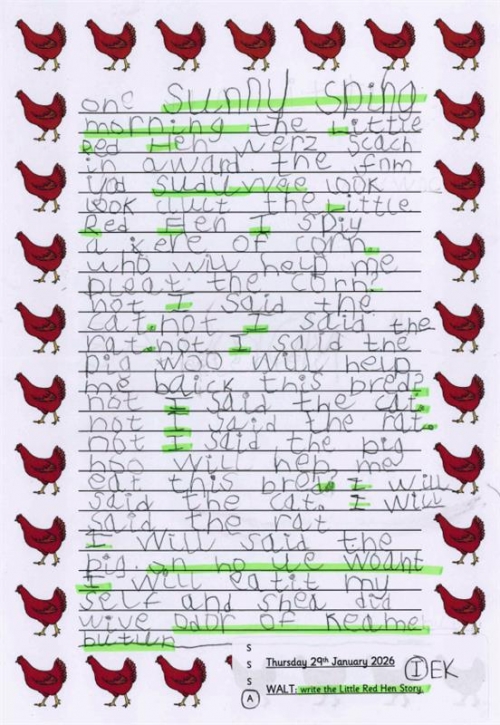
Writer of the week is Musa AB in Year 1 for his re-telling of the traditional tale The little Red Hen. We are very proud of Musa who showed lots of determination to complete his re-telling!
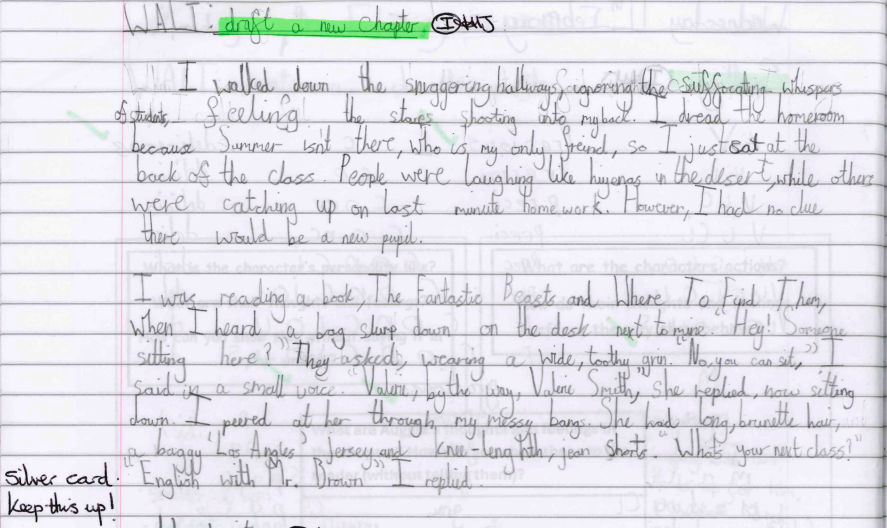
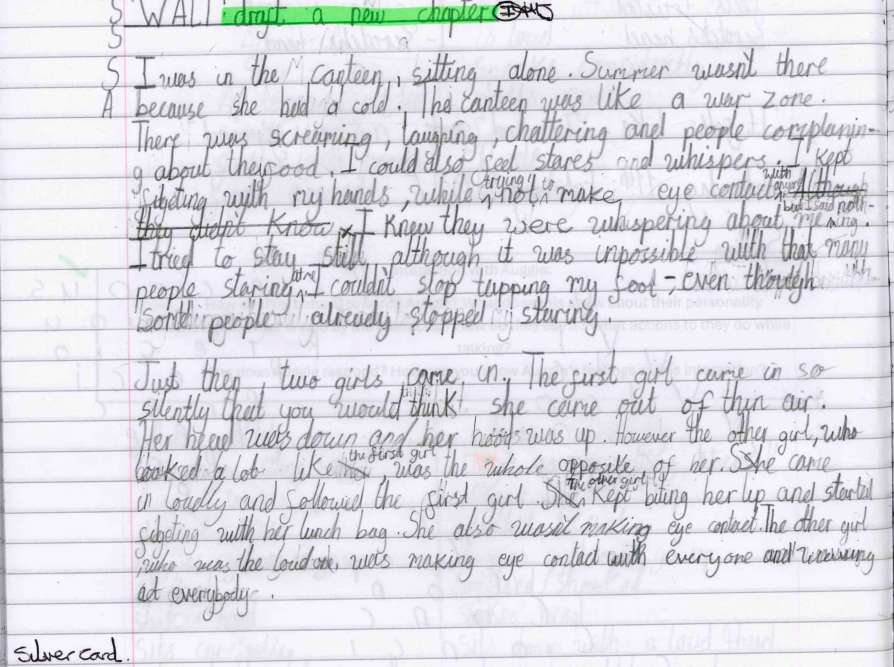
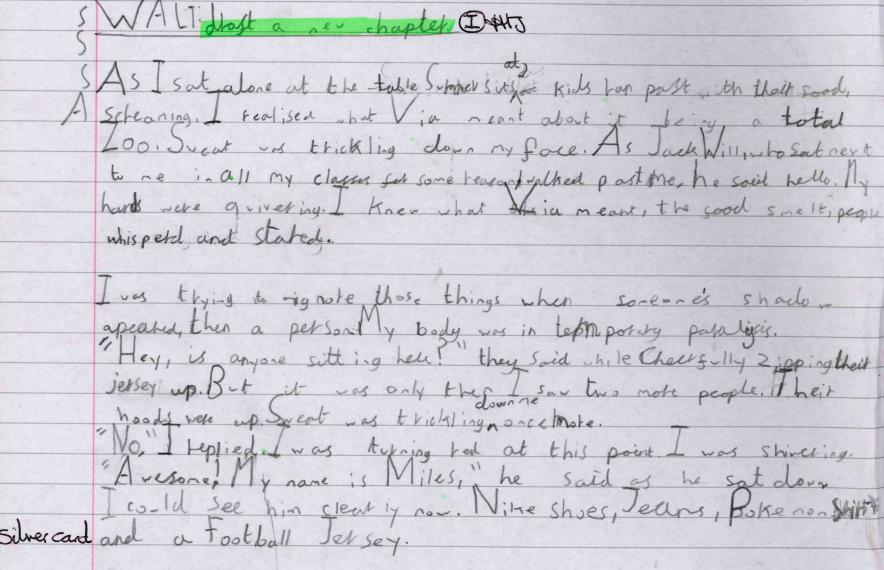
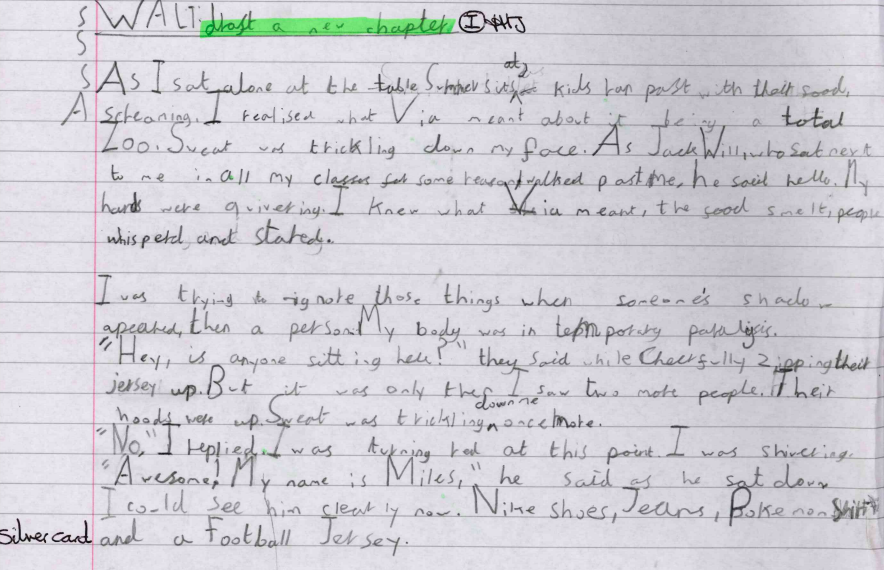
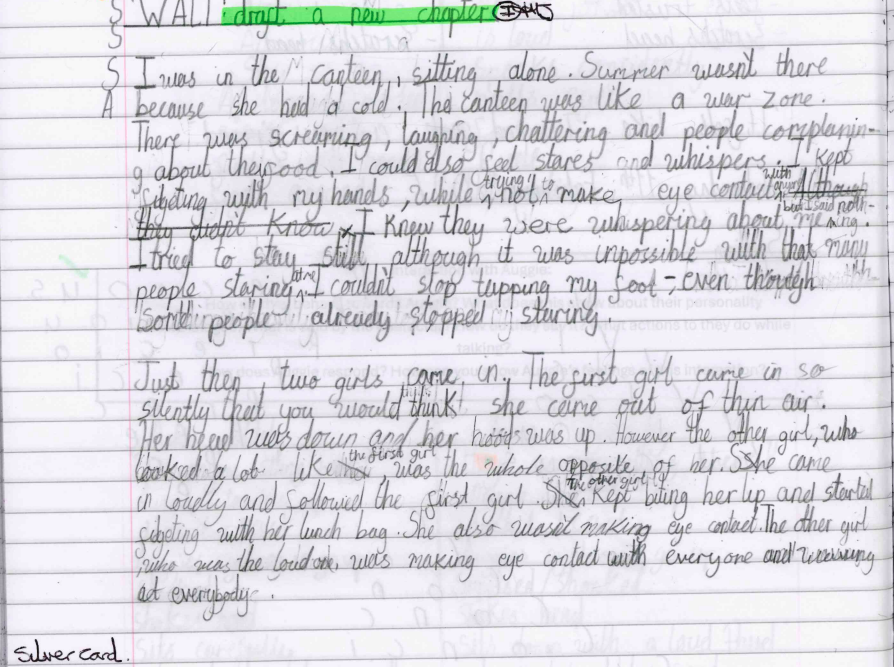
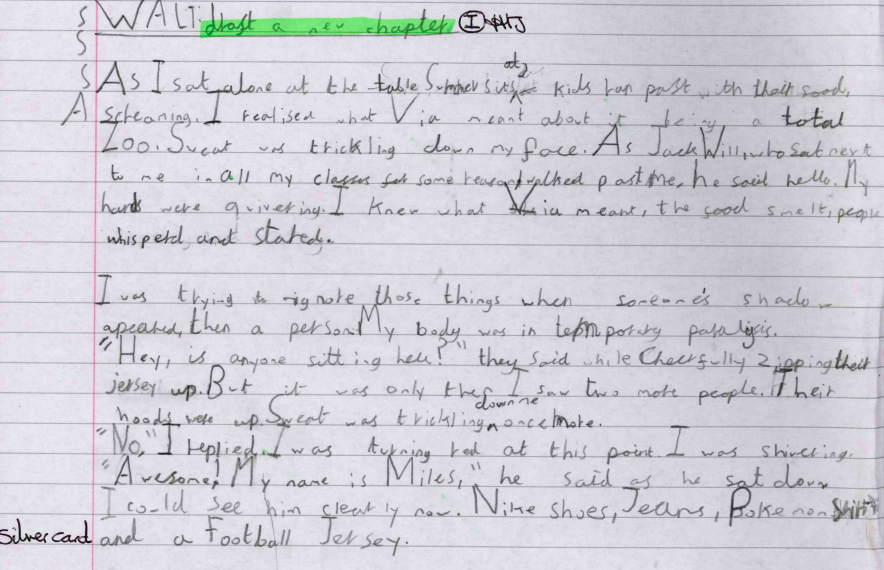
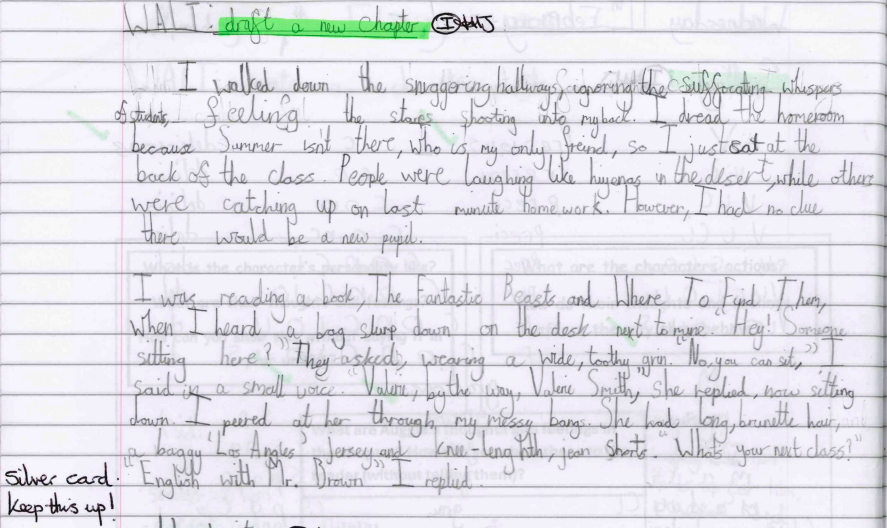
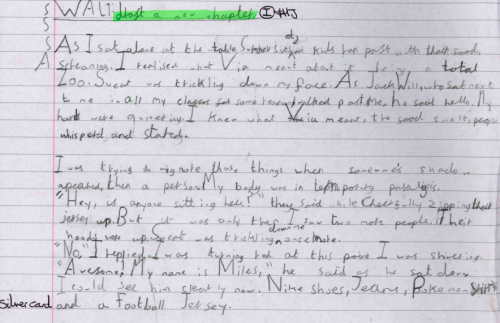
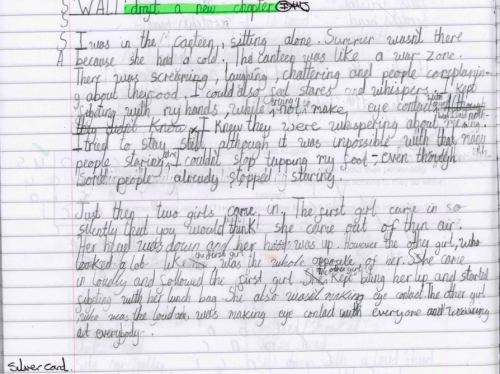
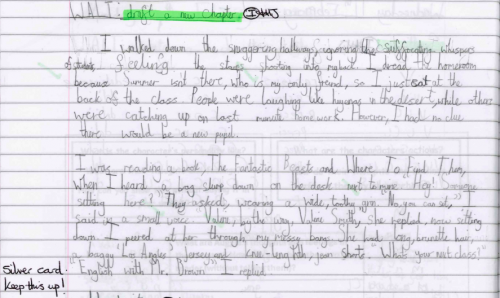
Writers of the week are Riley, Firdaus and Amara in Year 5 for the start of their additional chapters based on the key text Wonder by R.J. Palaccio. The children have focused on using 'show not tell' for imagery, dialogue to show characterisation through action, and parenthesis. Mrs Jones was so impressed with all of Year 5's writing on Wednesday that she was unable to pick just the one child! Fantastic!
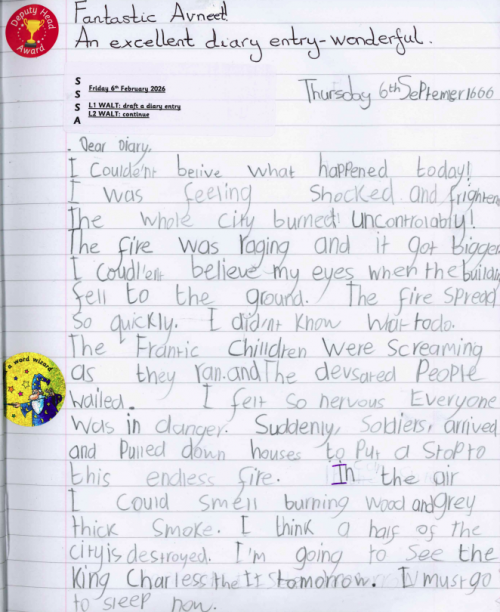
Writer of the week is Avneet in Year 2 for her excellent recount based on the Great Fire of London. Avneet has written in correctly punctuated sentences and used vocabulary for effect, including precise verbs, adjectives and adverbs. She has maintained the past tense and written the events in chronological order. Fantastic Avneet.
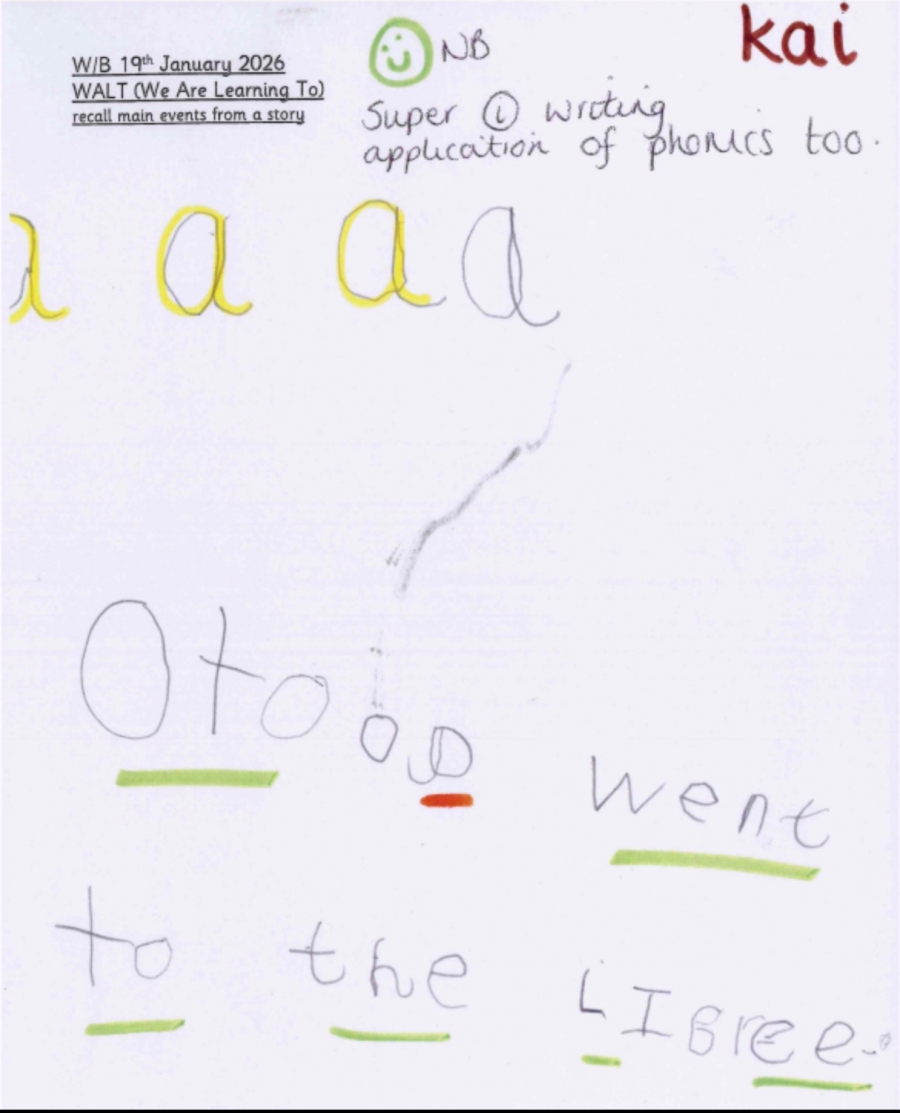
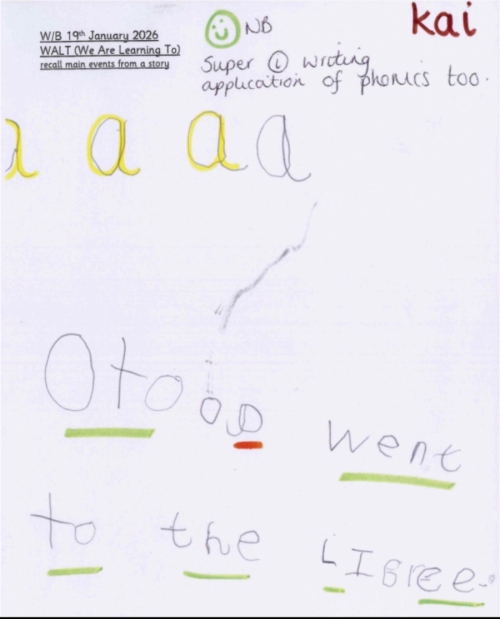
Writer of the week is Kai in Reception for using his phonic skills to write a sentence based on the key text Otto the book bear by Katie Cleminson. Well done Kai!
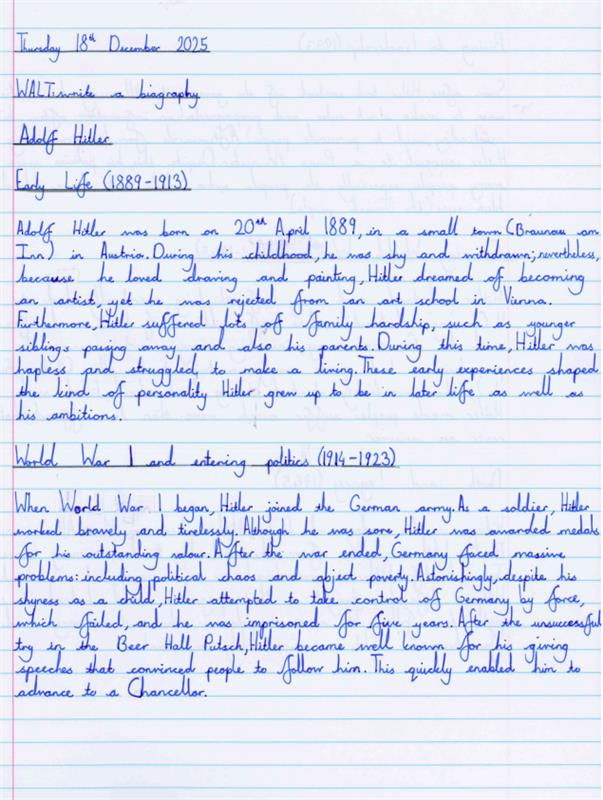
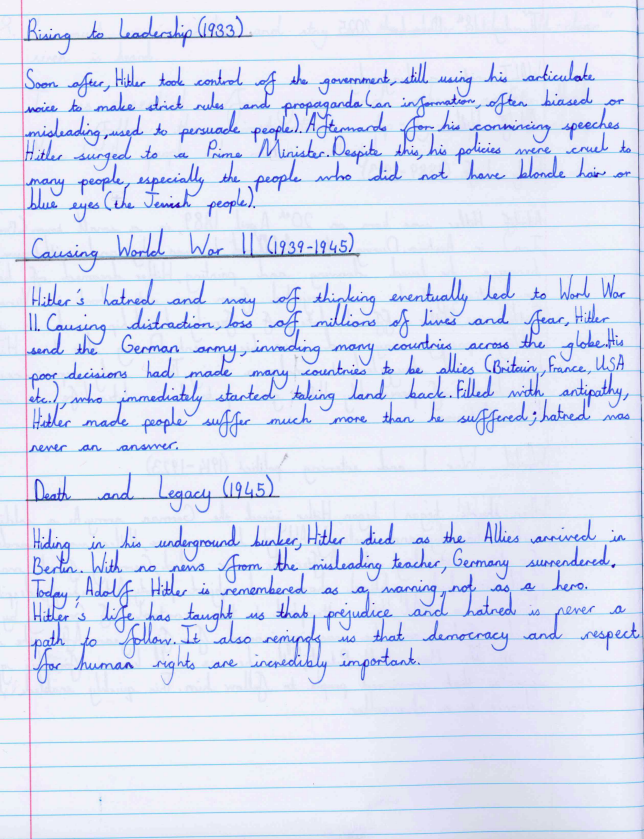
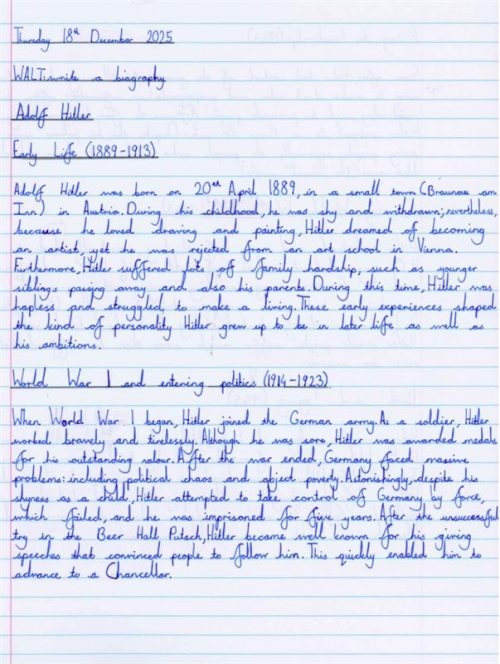
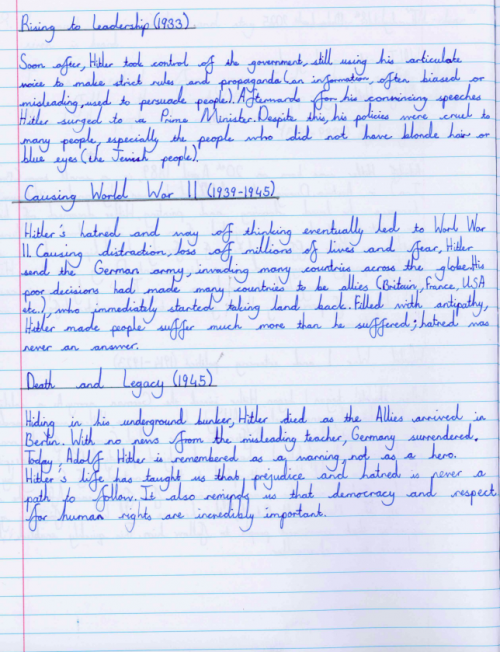
Writer of the week is Azra in Year 6 for her excellent biography. Azra has used conjunctive adverbs, correctly punctuated, to vary her sentence structures, as well as cohesive adverbials to link sentences and paragraphs. She has used expanded noun phrases to convey information precisely as well as abstract nouns to support her formal tone. Well done Azra.
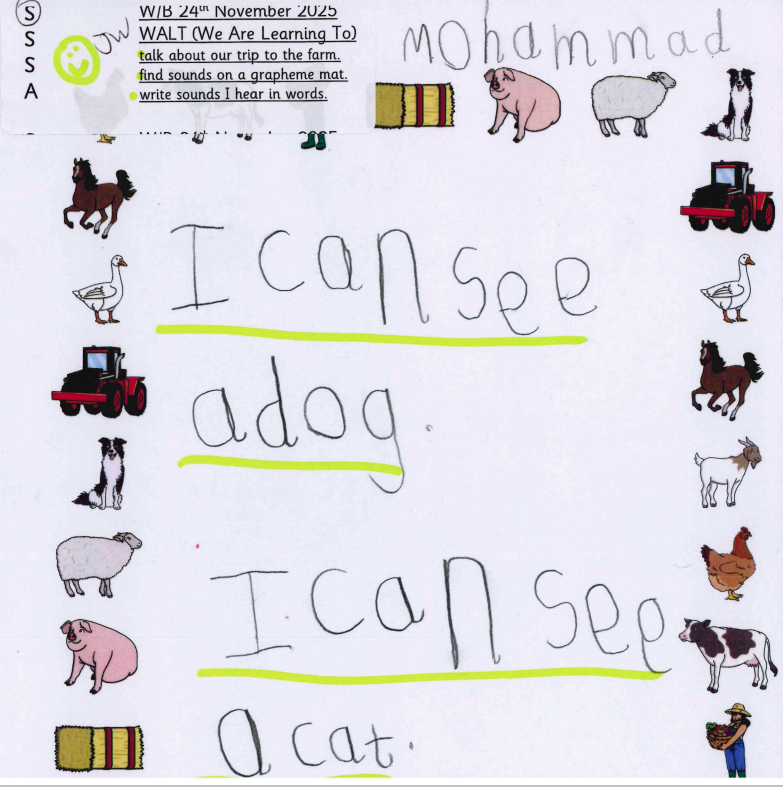
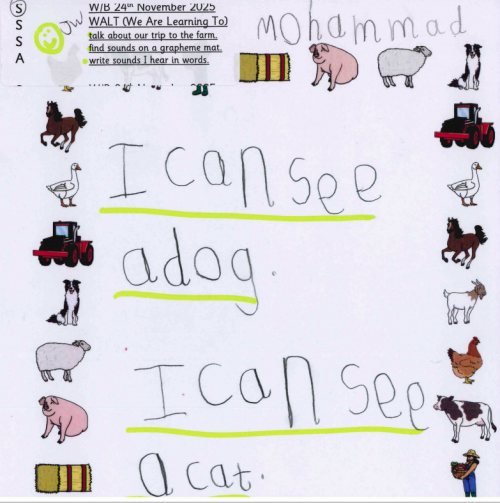
Writer of the week is Mohammad in Reception for his writing about Reception's trip to the farm.. Mohammad has used his grapheme mat to accurately write the sounds in the words. He has also punctuated his sentences correctly with capital letters and full stops. Wonderful writing Mohammad.
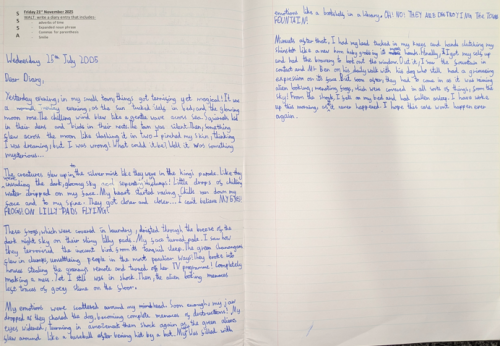
writer of the week is Daniel in Year 5 for his informal recount based on the book Tuesday by David Wiesner. Daniel has used adverbials of time to move the action along, parenthesis, descriptive language and similes, a range of sentence structures and varied but appropriate verb forms. Well done Daniel!
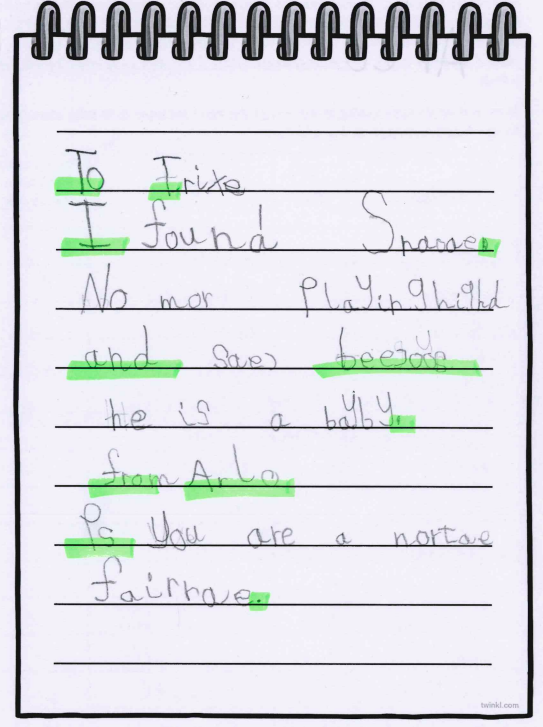
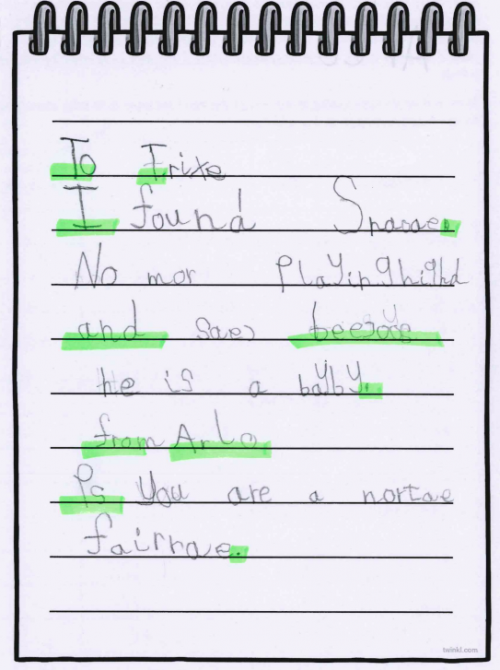
writer of the week is Arlo in Year 1 for his letter to Year 1's naughty class fairy who hid Snowy the penguin from the book Lost and Found by Oliver Jeffers in the school freezer! Arlo has used his phonics knowledge to write phonetically plausible words; used capital letters for proper nouns and to start a sentence; as well as punctuated his sentences with a full stop. Well done Arlo!
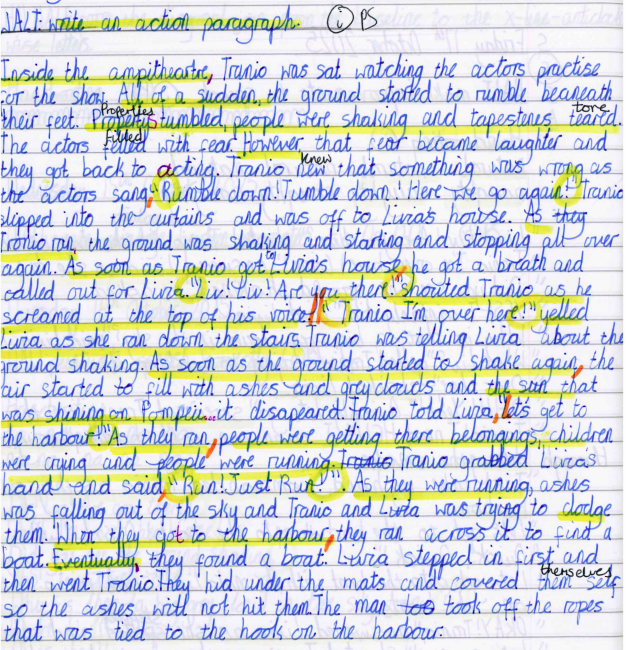
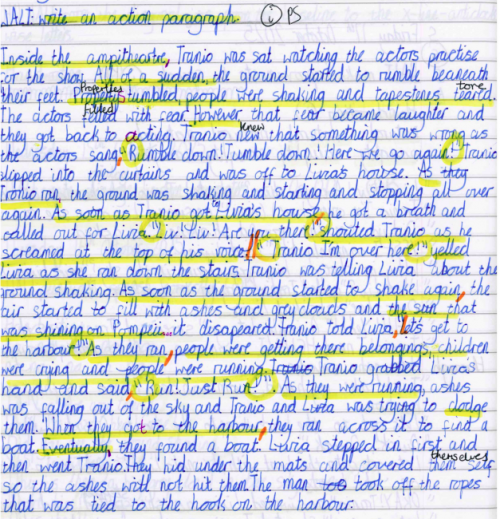
writer of the week is Sarvani in year 4 for her incidental write based on the book Escape from Pompeii by Christina Balit. Saravani has used fronted adverbials of time, manner and place, dialogue including actions to show characterisation and powerful verbs in her action writing. Well done Sarvani.
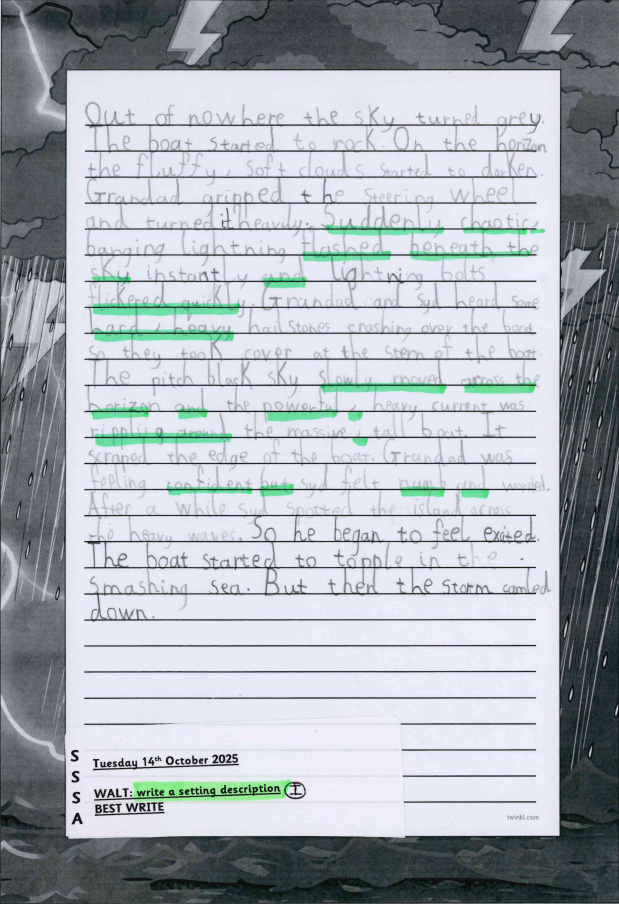
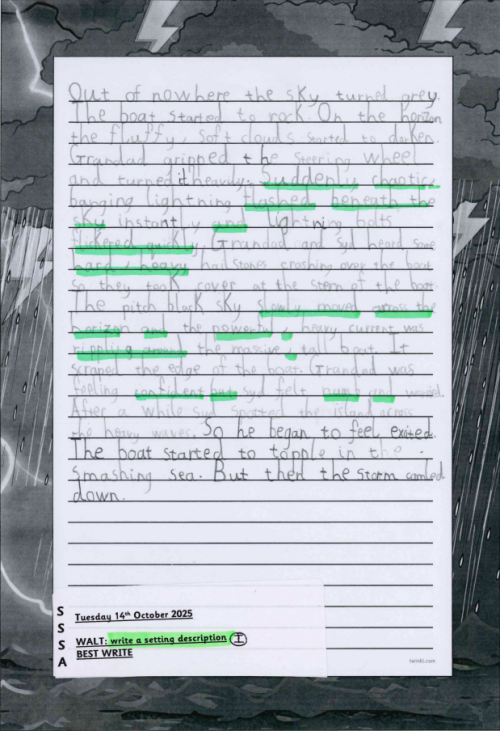
Writers of the week are Oliver in Year 2 and Frieda in Year 3. Oliver has written a setting description based on the book Granddad's Island by Benji Davies. He has used expanded noun phrases, commas in lists, precise nouns and adjectives and powerful verbs. A fantastic piece of writing for the start of Year 2!
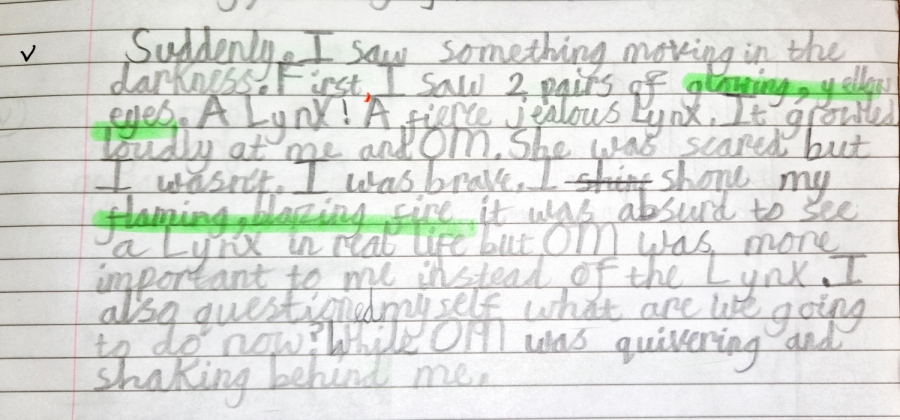
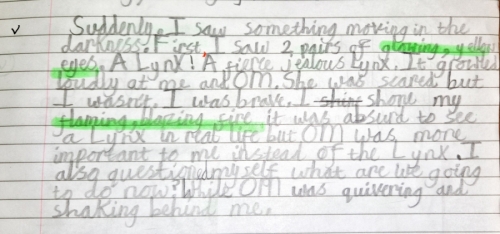
Frieda has used a variety of expanded noun phrases interwoven in her narrative of an innovated scene based on Stone Age Boy by Satoshi Kitamura where Om meets a different creature in the cave. Well done Frieda.
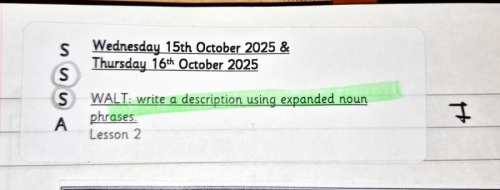
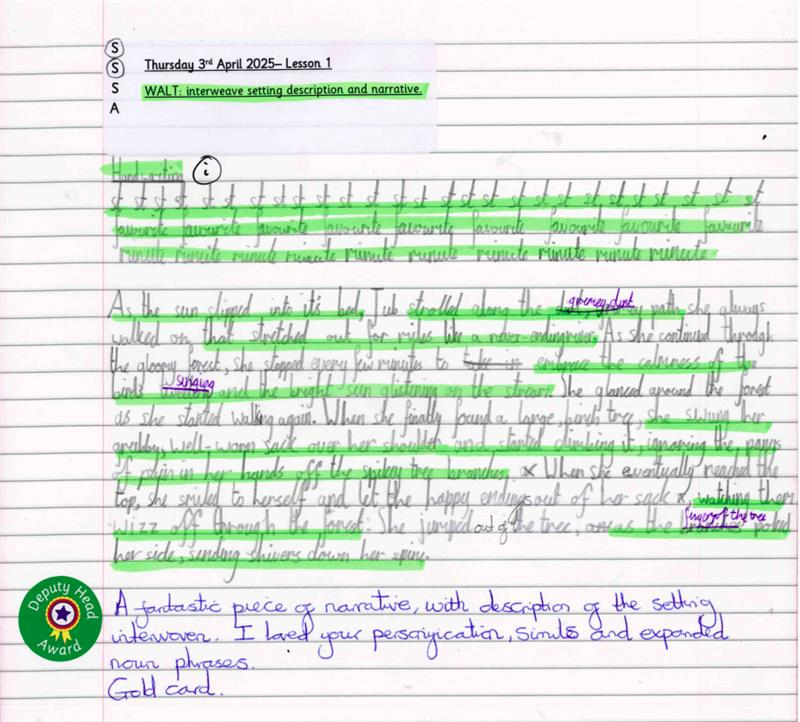
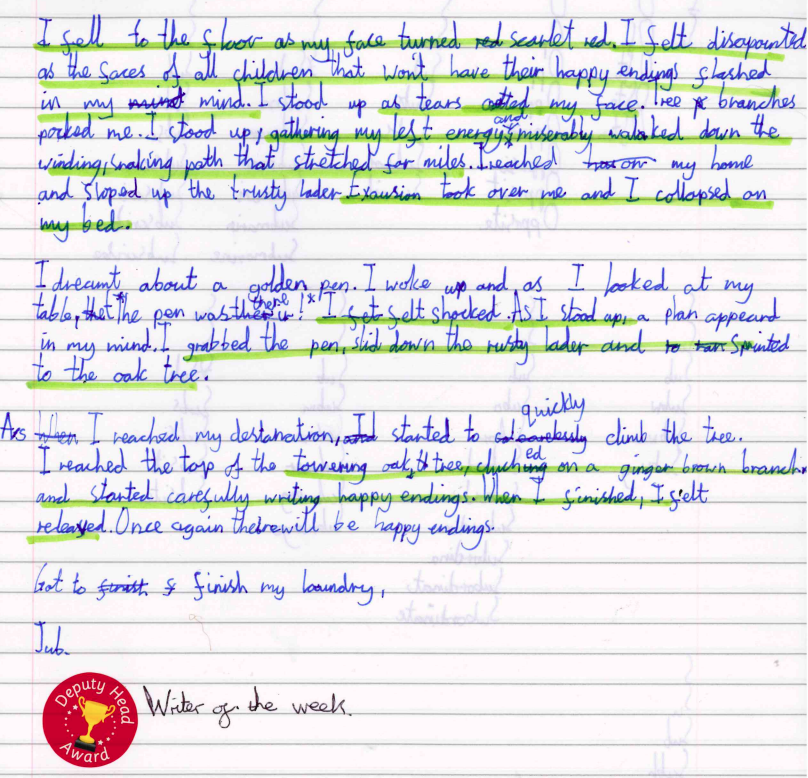
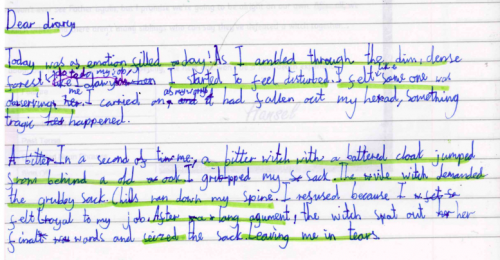
Daniel in Year 4 for his fantastic diary entry in role as Jub from The Lost Happy Endings by Carol-Ann Duffy. Daniel has detailed the events cohesively, used a range of descriptive techniques as well as fronted adverbials in his work. An excellent piece of writing. Well done Daniel.
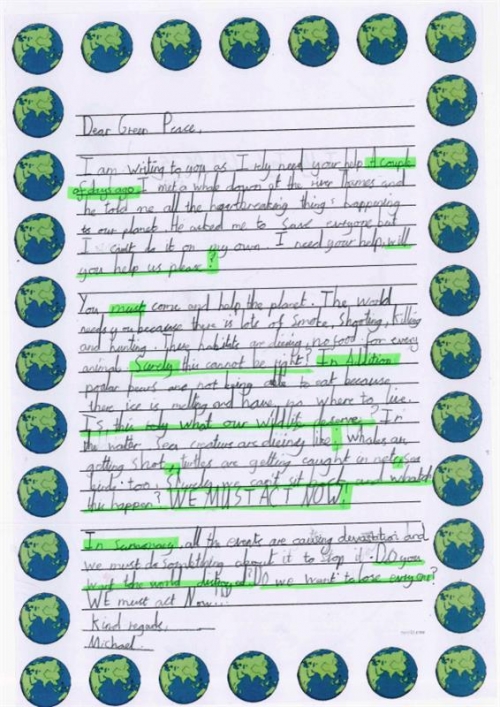
Teddy in Year 3 for his persuasive letter to Greenpeace, written in role as Michaeal from the book This morning I met a whale by Michael Morpurgo. Teddy has used a variety of sentence openers, modal verbs, rhetorical questions and emotive language in order to be persuasive and call Greenpeace to action. Well done Teddy!
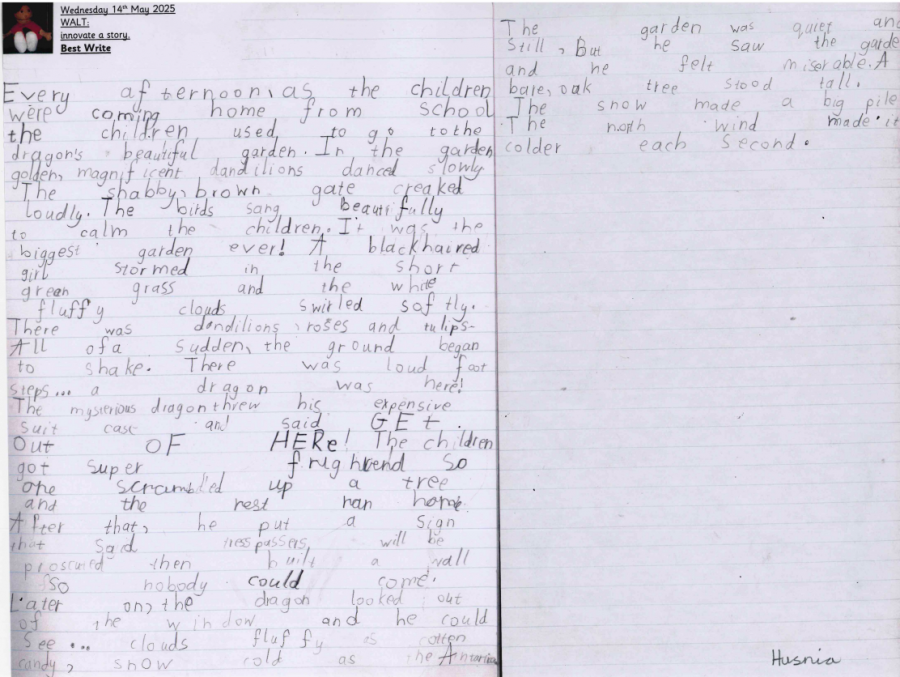
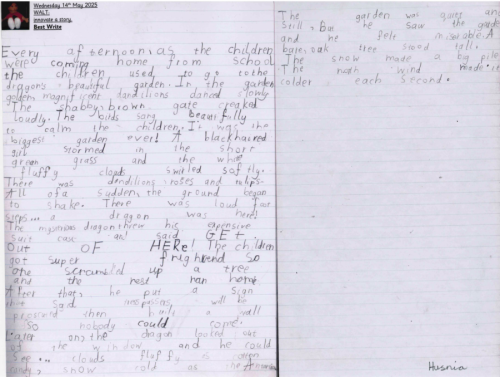
Husnia in Year 2 and David in Year 1. Husnia has innovated on the story of The Selfish Giant by Oscar Wilde, using noun phrases, adverbs and precise nouns and verbs to aid her description in her coherent narrative.
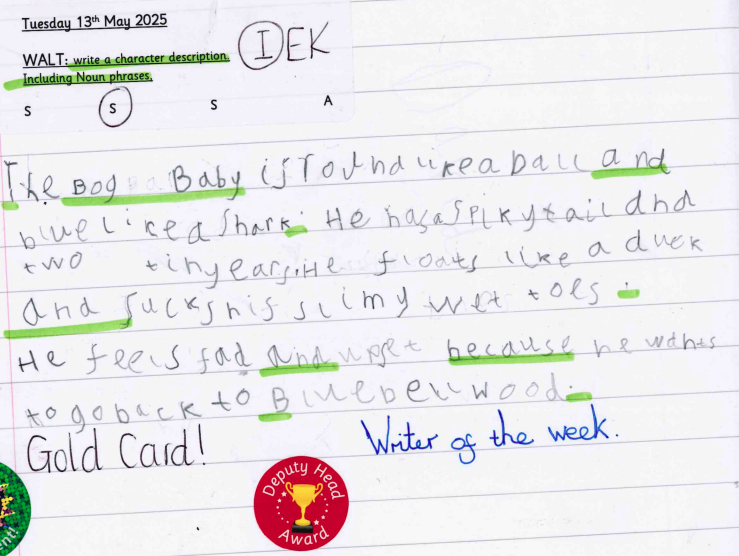
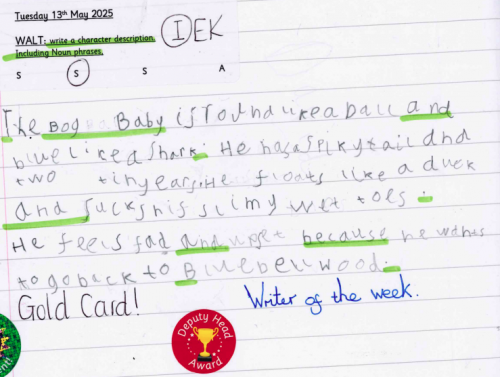
David has written a description of the Bog Baby based on the book by Jeanne Willis. He has punctuated his sentences correctly, including using a capital letter for proper nouns and joined his ideas using 'and' and 'because'. He has used noun phrases and similes to describe.
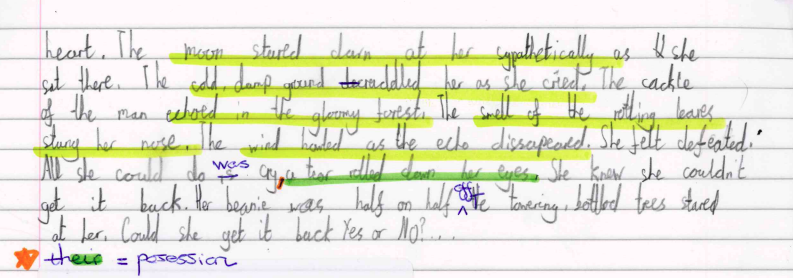
Dennis in Year 4 for his use of description to build atmosphere, based on the story of the lost happy endings by Carole Ann Duffy. Dennis has used description to reflect Jub's mood when her sack of happy endings is stolen. well done Dennis.

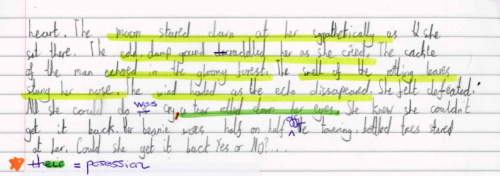
Kareem in Year 1 for his wonderful story innovation based on the traditional tale of Little Red Riding Hood. Kareem has written in full sentences, correctly punctuated with a capital letter and full stop as well as using adjectives to describe his characters and settings. He has joined some of his sentences using 'but' and 'and'. A cohesive re-telling Kareem!
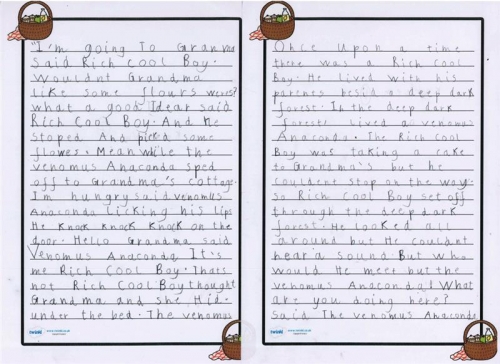
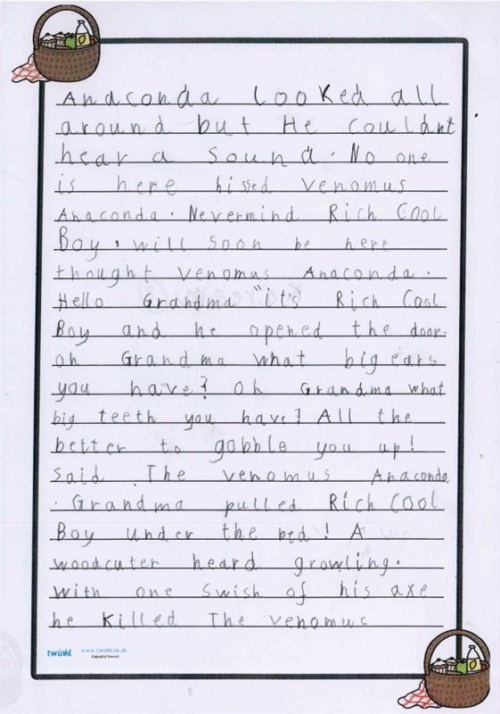
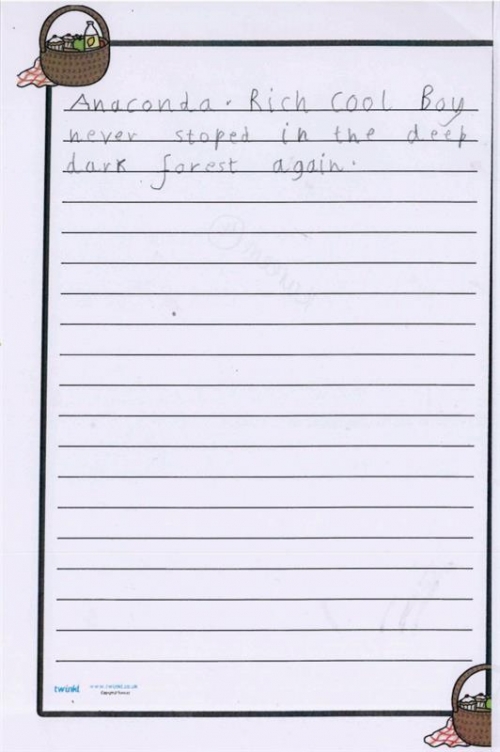
Amara in Year 4 for her truly excellent piece of narrative based on The Lost Happy Ending by Carol Ann Duffy. Amara has been set the task to interweave setting description into her narrative which she has done very effectively, using personification, similes and expanded noun phrases. Her vocabulary choices are well chosen and support the tone of her writing. I truly am blown away by this piece of work! Well done Amara!
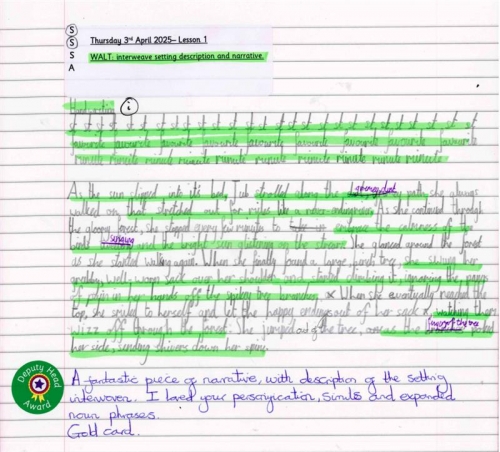
Frieda in Year 2 for her narrative based on Grandpa's Island by Benji Davies. Frieda has used expanded noun phrases, a variety of time openers, precise verbs and some adverbials. Well done Frieda!
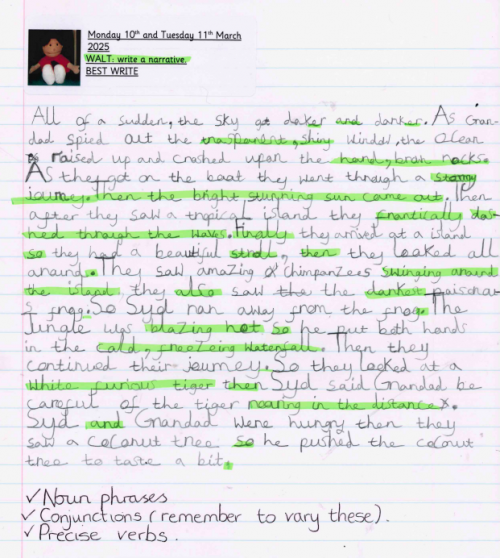
Darcey in Year 4 for her draft of a story innovation based on Leon and the place between by. Darcey has been supported in verbalising her sentences she wants to write, and has used the scaffold of having lines drawn for her to indicate how many words she needs to write in each sentence. Darcey, we are so proud of you for this piece of work!
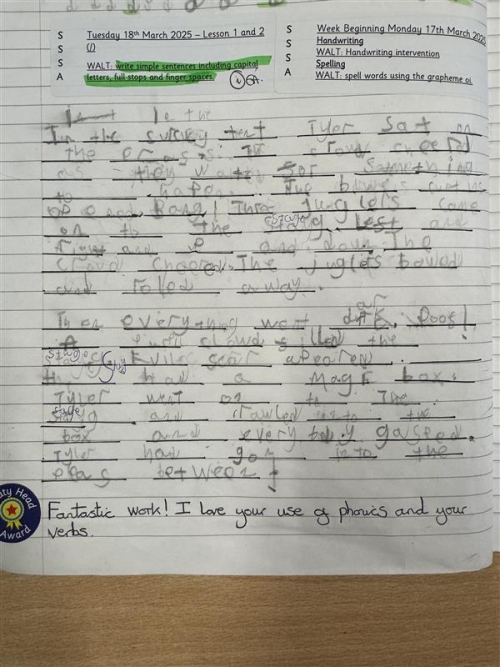
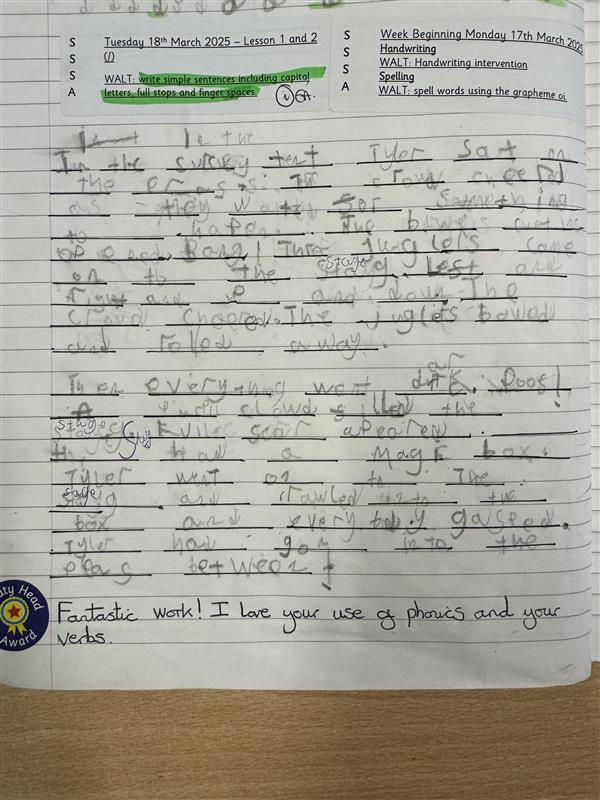
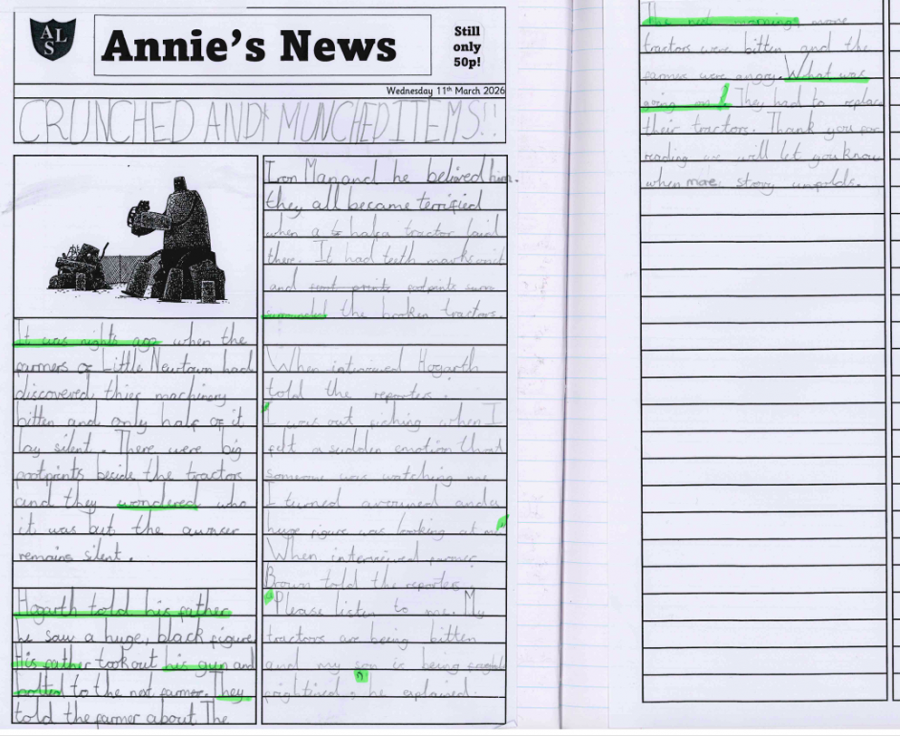
Robyn in Year 3 who has tried really hard, using her learning journey to write the opening to her own story based on The Iron Man by Ted Hughes with an alternative main character. Robyn has used her Grow the Code chart to support her to spell.
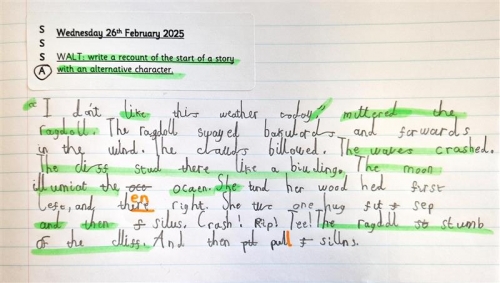
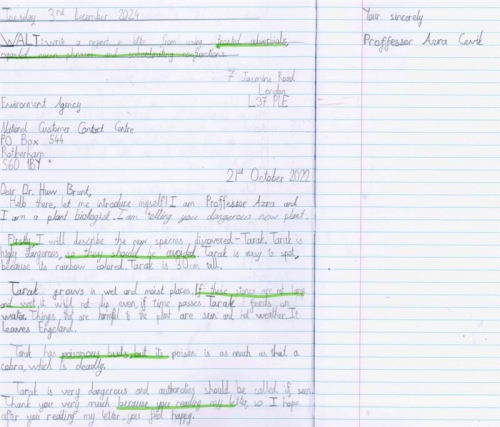
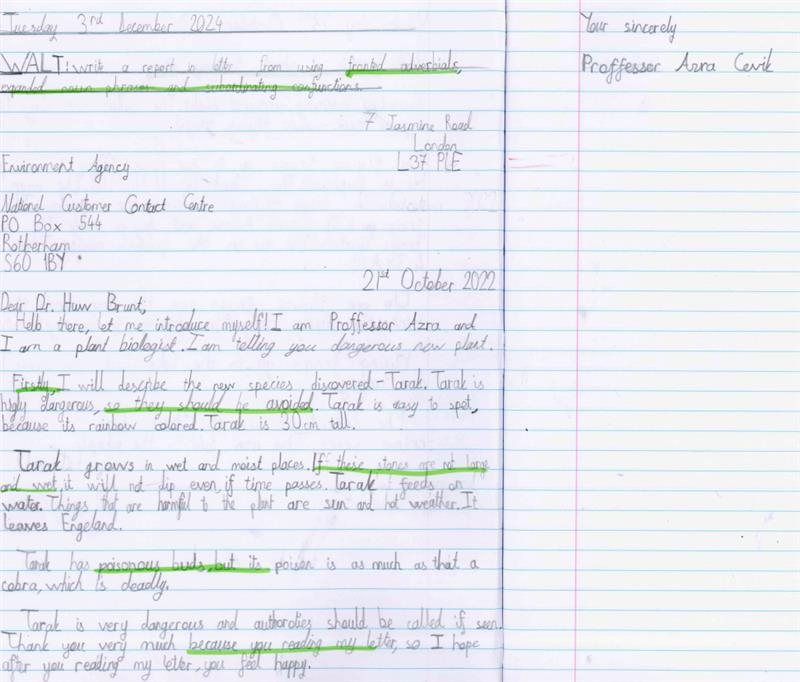
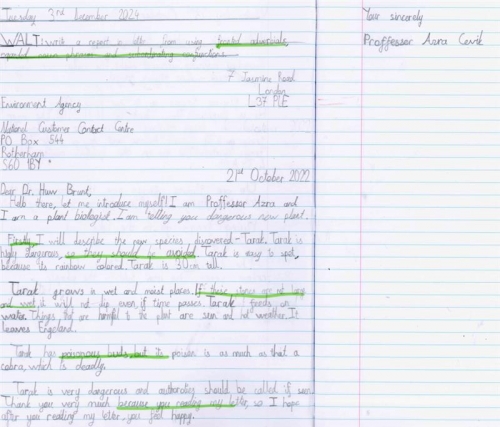
Asra in Year 5 for her report on a new species of plant based on the Bluchers from The Boy in the Tower by Polly Ho-Yen. Asra hasn't been with us very long and we are very proud of the progress she has made so far in both her phonics and her writing. Well done Asra, keep it up!
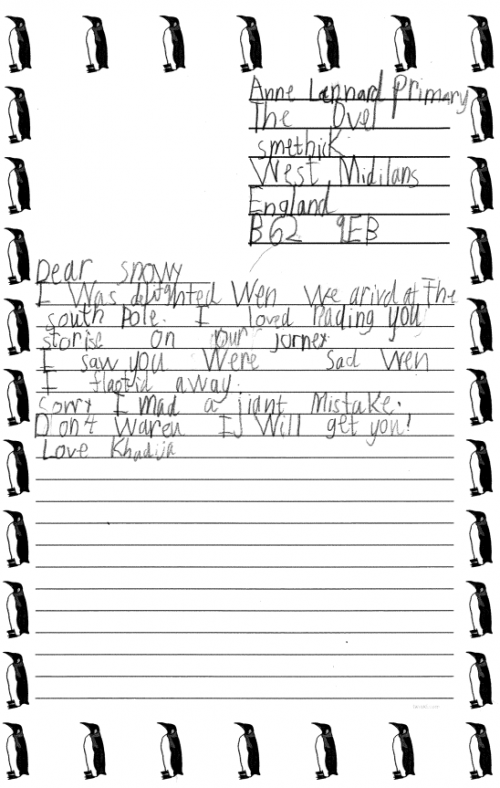
13/12/2024 Khadija in Year 1 for a wonderful letter to 'Snowy' the penguin in the book Lost and Found by Oliver Jeffers. Khadija has used her phonics to spell words phonetically plausibly, has punctuated her sentences accurately with capital letters and full stops, has used a conjunction to join ideas and shows accurate letter formation in her writing. Excellent Khadija!
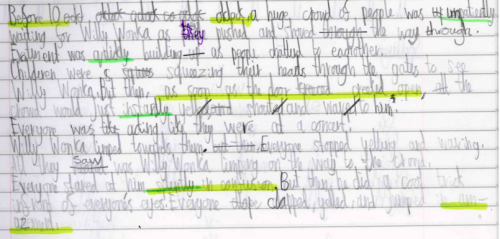
29/11/2024 Yosra in Year 4 for her narrative extract based on Charlie and the chocolate factory, which using a range of adverbials - both of time and manner. Well done Yosra, I can't wait to read the rest!
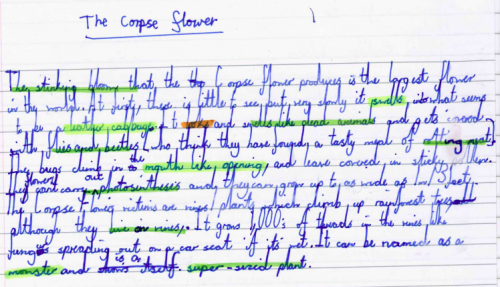
15/11/2024 Harri in Year 5 for his description of his viscous plant creation - the corpse flower. Harri has used a formal style, befitting the audience of his final outcome piece and technical, subject specific vocabulary, inline with the purpose of his writing. Well done Harri!
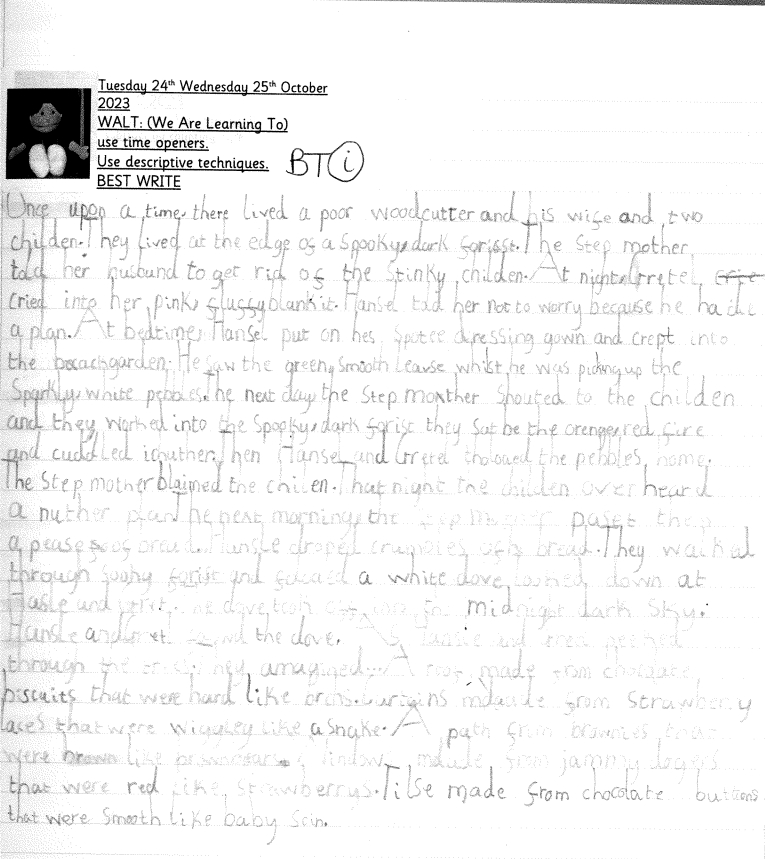
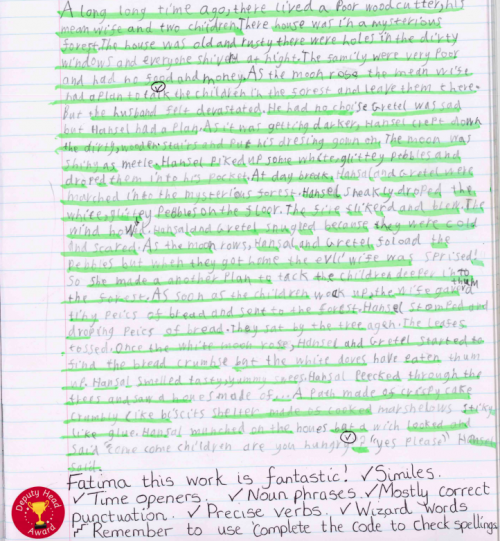
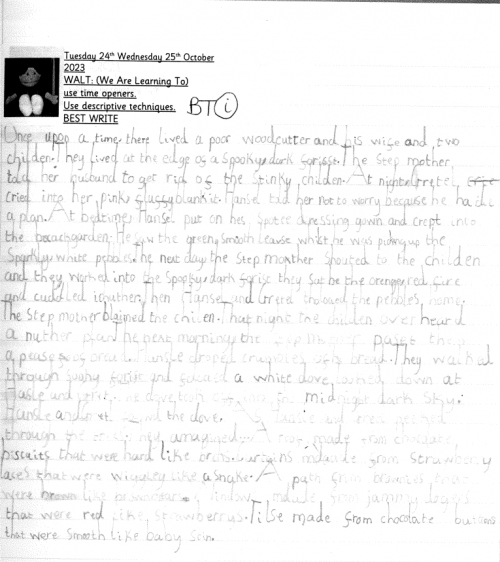
8/11/2024 Fatima in Year 2 for her excellent narrative, re-telling the fairy tale of Hansel and Gretel. Fatima has used a range of time openers to move the narrative along as well as a range of descriptive techniques such as: precise verbs and adjectives, expanded noun phrases, similes and adverbs to bring the story to life in the reader’s mind. A fantastic first Best Write in Year 2 Fatima!
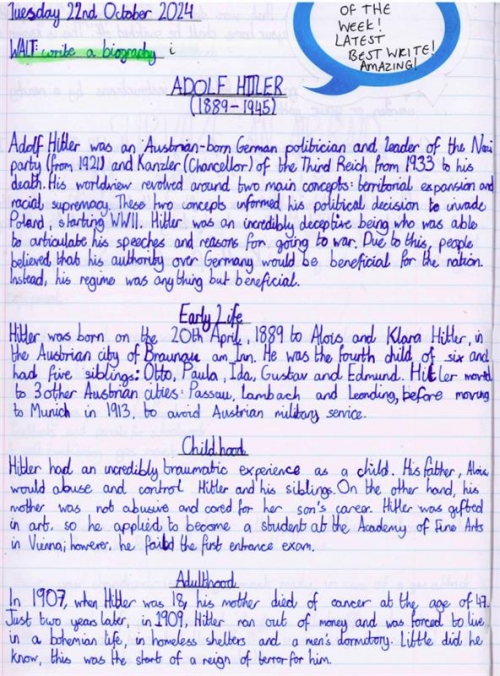
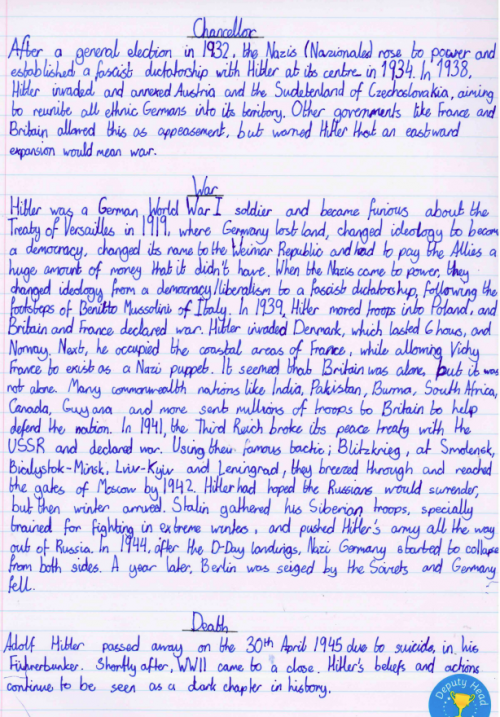
25/10/2024 Zayan in Year 6 for his biography, written as part of writing across the curriculum when looking at World War II in History. Zayan has maintained a formal style throughout and used technical, subject specific vocabulary, showing his awareness of audience and purpose. Well done Zayan!
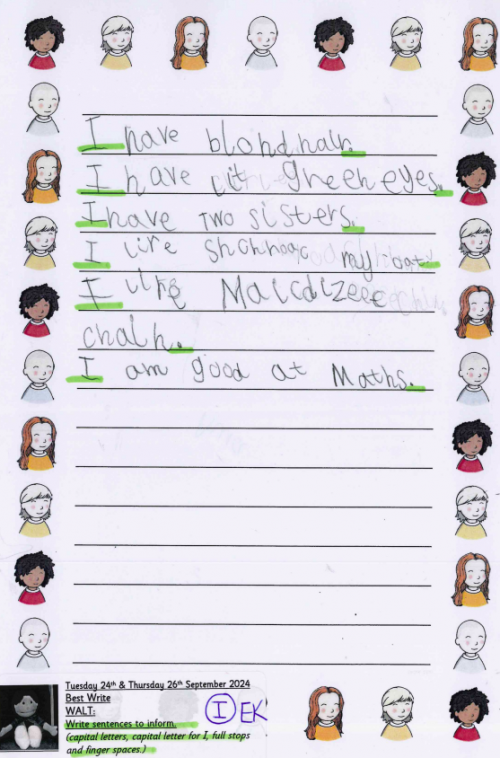
04/10/2024 Aura in Year 1 for her informative sentences describing herself, based on text Super, Duper You by Sophie Henn. Aura has used correct sentence punctuation and applied her phonics to spell the words she has used in her description. Well done Aura! A great start to writing in Year 1!
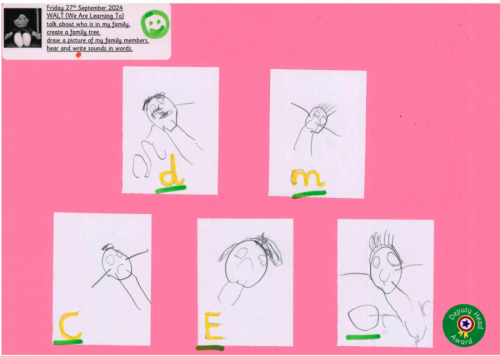
27/09/2024 - Quinn in Reception for her family tree work where she has correctly heard the initial sounds in the words for the members of her family, and has used the grapheme mat to represent the sounds correctly. Superstar Quinn!
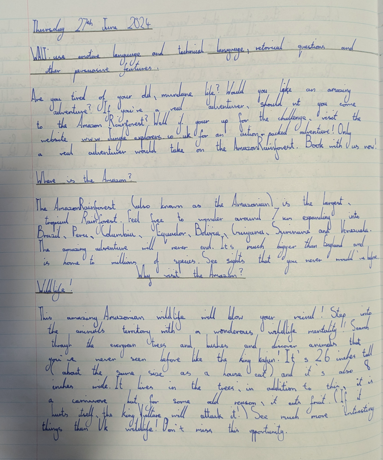
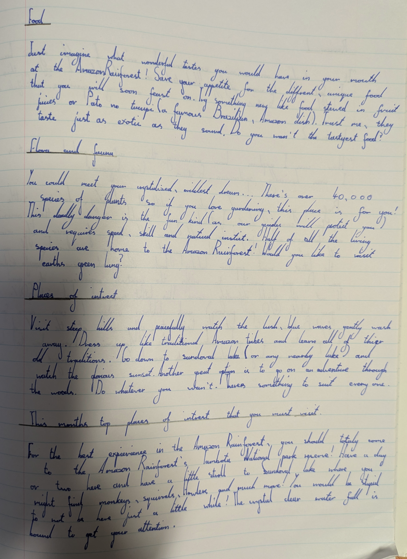
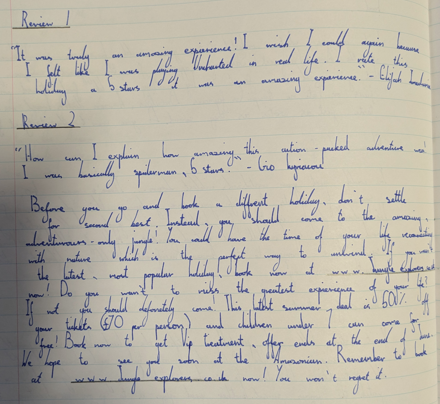
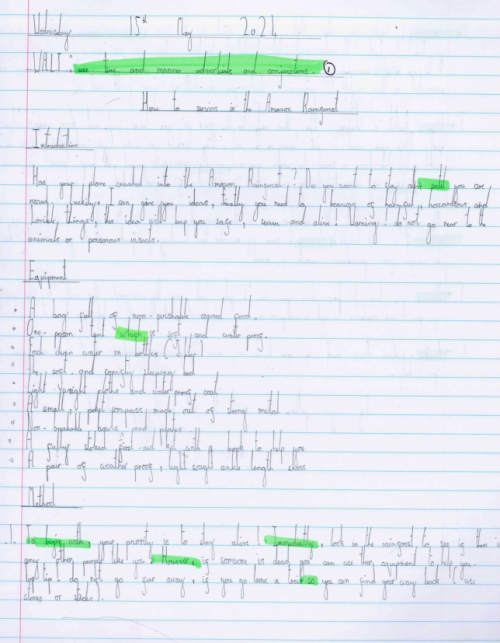
Remayo in Year 5 for his wonderful persuasive guide to the Amazon. Remayo has used a range of persuasive language features such as emotive language, rhetorical questions, rule of 3, and facts and figures. Where do we sign up Remayo, you've convinced us!
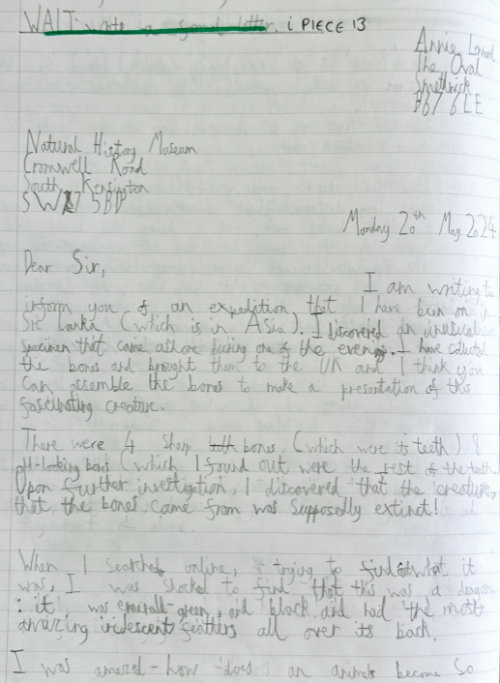
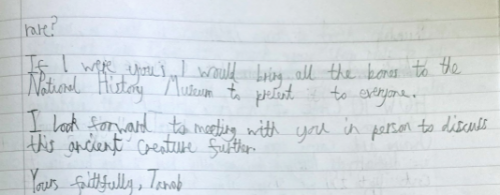
Tawab in Year 6 for his excellent letter to the Natural History Museum, reporting the sighting of a mythical creature, based on the book Fantastic Beasts and where to find them by J. K. Rowling. Tawab has used a formal tone, with his language and grammar choices reflecting the official nature of his letter. Well done Tawab!
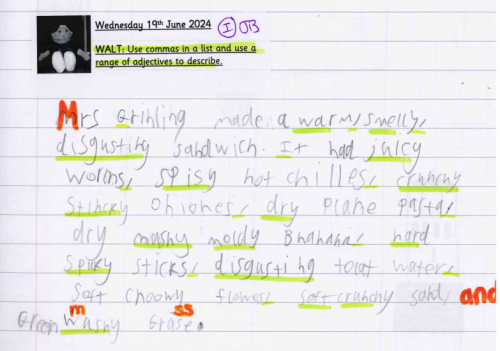
Evie in Year 1 for her excellent description of the sandwich Mrs Grinling might make to scare away the pesky seagulls in the story The Lighthouse Keeper's Lunch by Ronda & David Armitage. Evie has used commas in a list successfully as well as a range of well chosen adjectives to fit the purpose of her writing. What a disgusting sandwich!
Nishi in Year 5
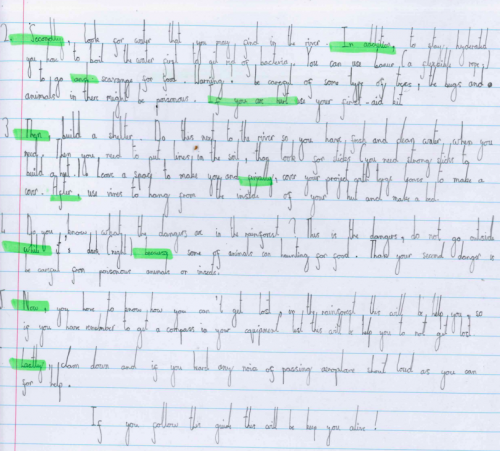
Fletcher in year 4
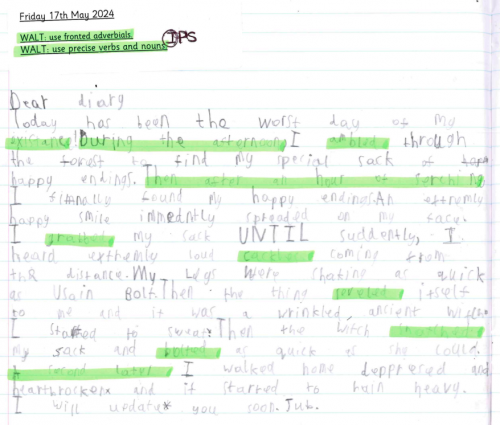
Sophie in Year 6
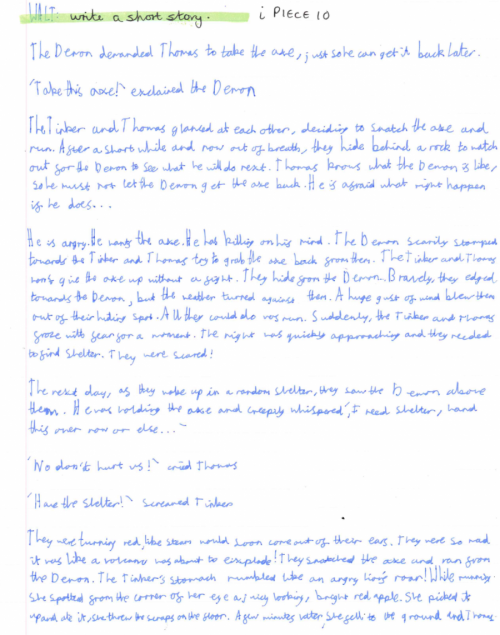
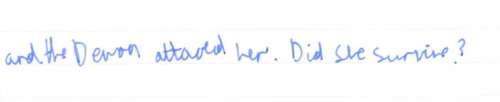
Sahib in Year 5
for her well written additional chapter for the novel Wonder by R.J Palacio. Sahib has developed her characterisation through imagery and character's actions and used correctly punctuated dialogue as well as expanded noun phrases to develop the description of the setting. Well done Sahib!
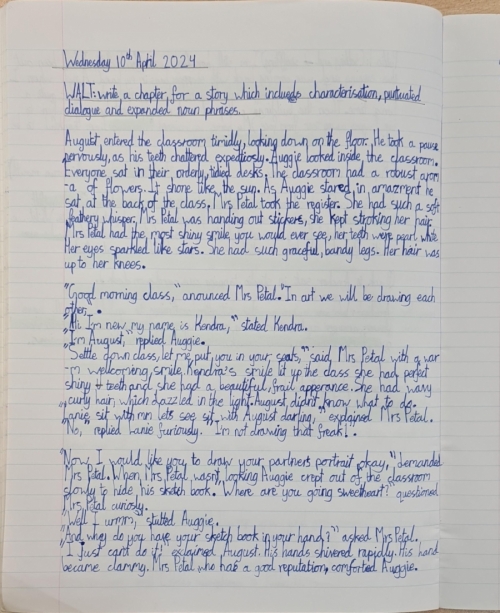
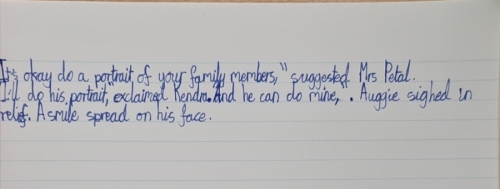
Jafar in Year 1
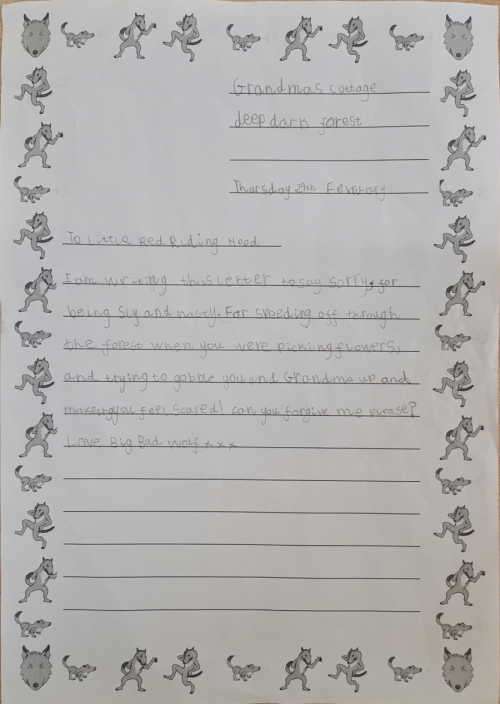
David in Reception
for his excellent sentence in role as Captain America for World Book day. David has heard the initial and final sounds in the words, independently using the grapheme mat to support him to write the graphemes needed. Wonderful David!
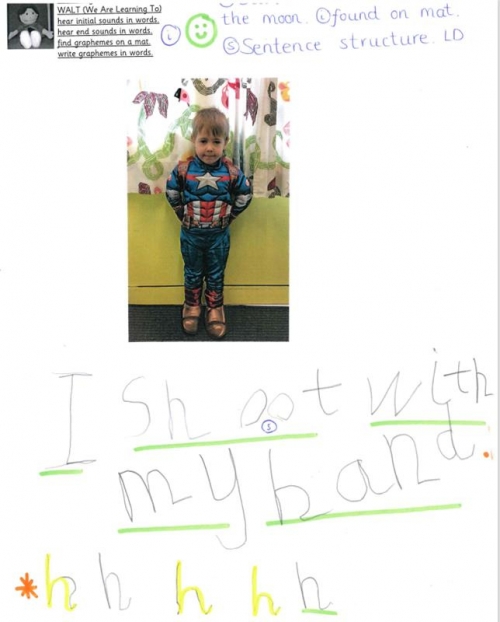
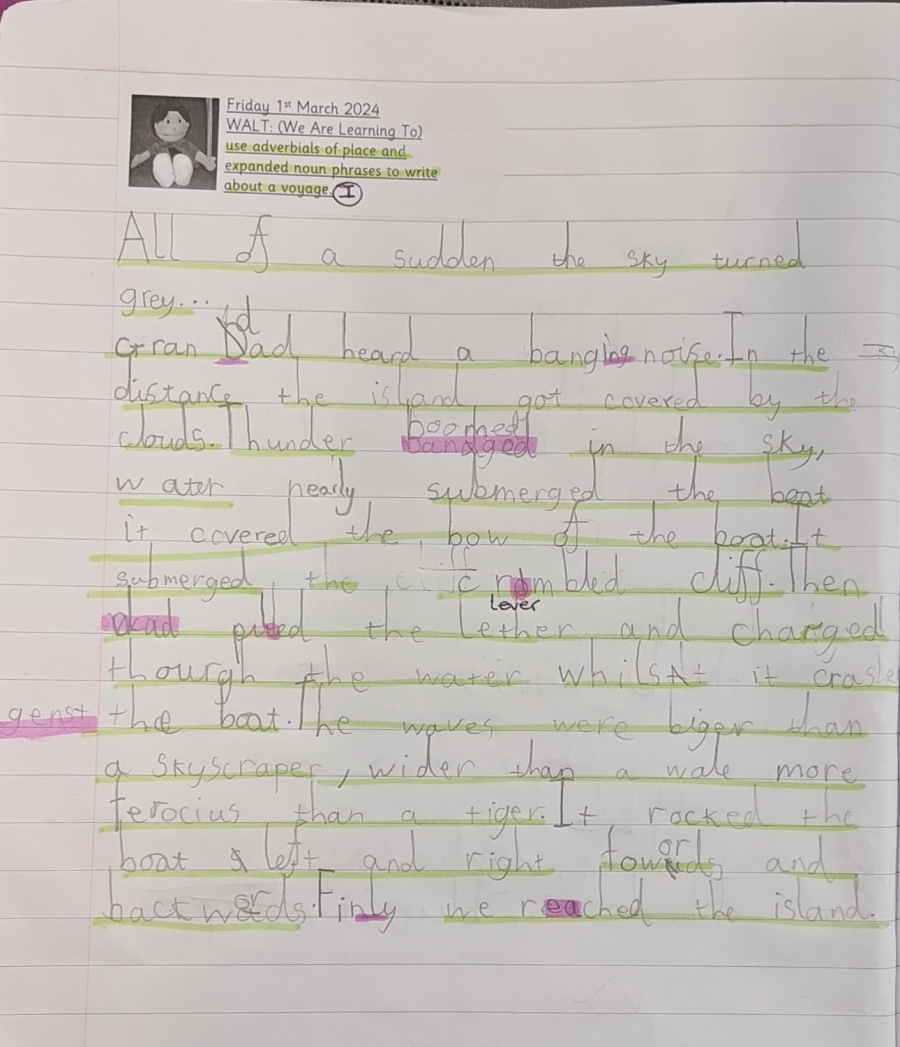
Ellis in Year 2
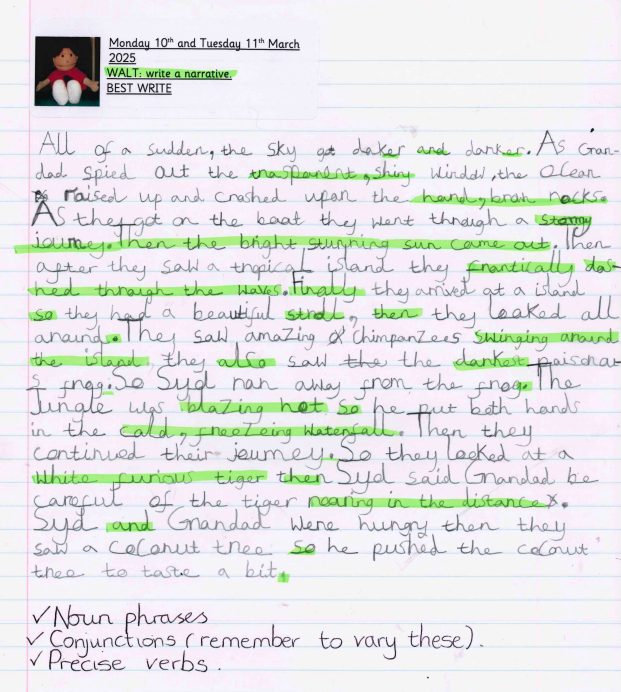
for his excellent use of adverbials of place and expanded noun phrases in his description of Syd and Grandad's journey towards the island based on the book Grandpa's Island. We also love Ellis' use of precise verbs and well chosen similes. Well done Ellis!
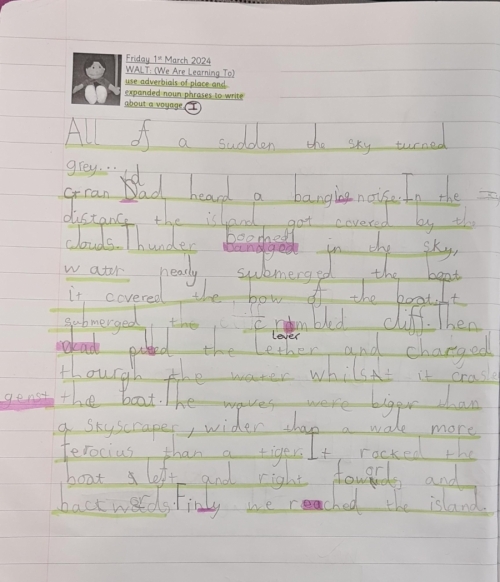
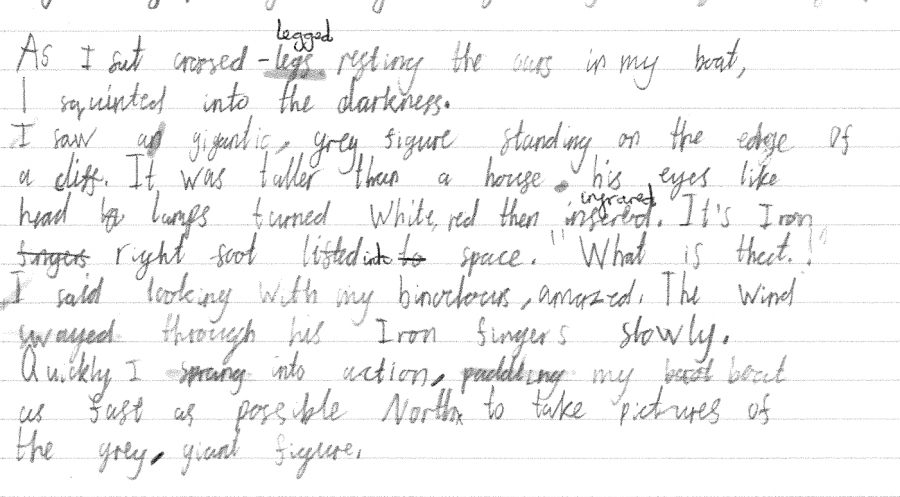
Dennis in Year 3
for his excellent piece of writing in role, using precise verbs to describe what he saw as a fisherman, witnessing The Iron Man fall from the cliff.
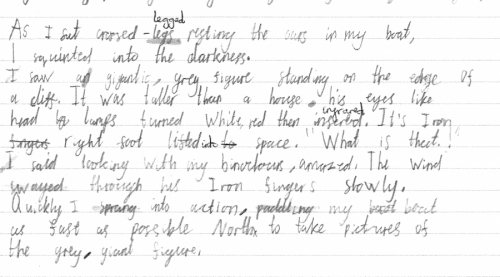
Daniel in Year 2
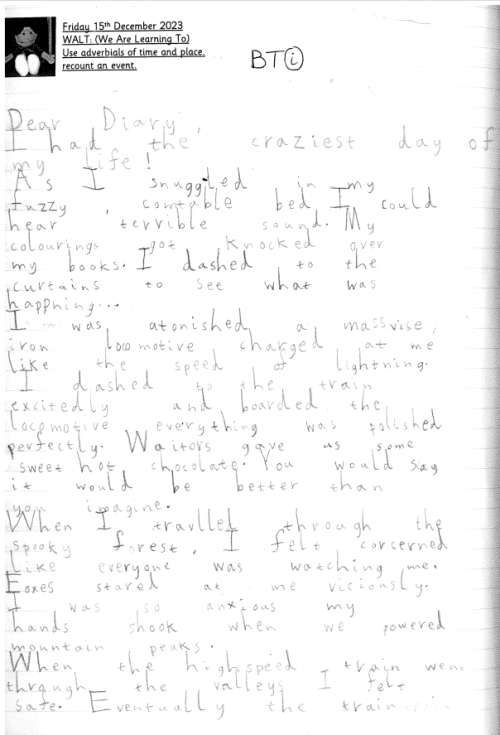
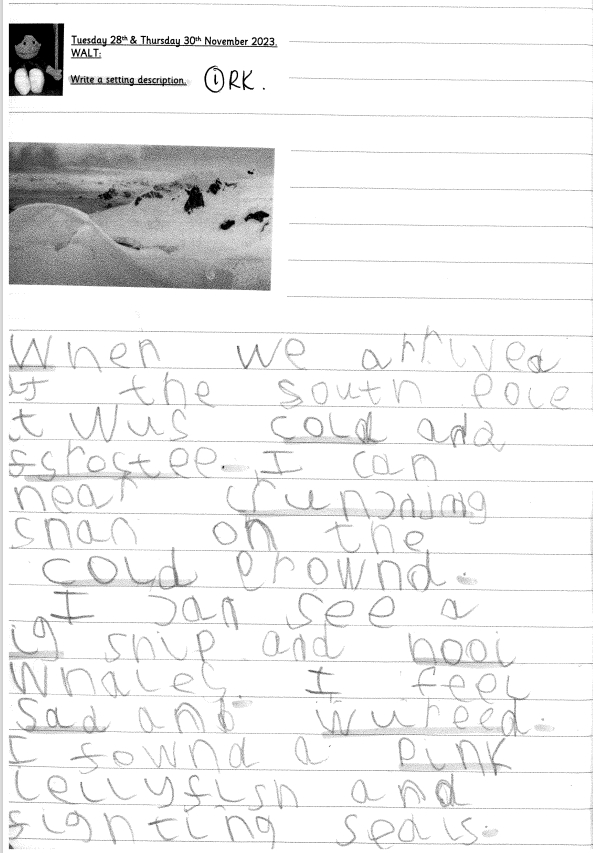
O'Shea in Year 1
for his wonderful setting description of the South Pole. O'Shea has used some lovely adjectives to describe the things he's seen and we're so impressed with how he's punctuated his sentences correctly with full stops and capital letters and used his phonics to help him spell. So very well done O'Shea!
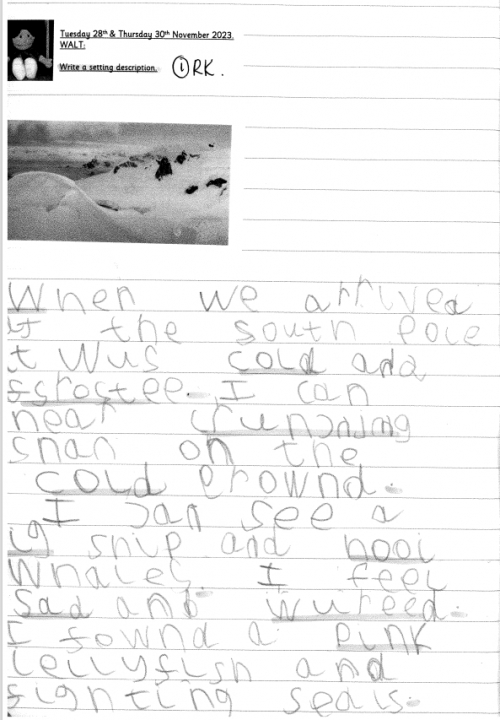
Scarlotte in Year 2 for a cohesive story innovation of Hansel and Grettel, using a range of descriptive techniques and well chosen time openers. Well done Scarlotte.
30th June
Imaan in Year 3
for her persuasive letter to Green peace to stop whaling. Imaan has used different cohesive devices to add to her reasons why whaling should come to an end.
23rd June
Demetri in Year 2
for his excellent story innovation based on the Selfish Giant by Oscar Wilde. Demetri has created his own character to replace the giant and used expanded noun phrases and precise verbs to describe his character and the garden in which they live. Year 2 used Talk for Writing to learn the beginning of the original story off by heart before innovating.
See links below to read it
15th June
Prartharna in Year 4
for a lovely piece of suspense writing using a variety of sentence lengths for effect. Well done Prartharna!
See link below to read it
19th May
Barkot in Year 4
for his newspaper report, detailing the discovery of King Tutankhamen's tomb. Barkot has used a journalistic style, careful and precise vocabulary choices and a variety of sentence types, correctly punctuated. Excellent Barkot!
See link below to read it
5th May
Jafar in Reception
Reception for his wonderful letter to King Charles 111, where Jafar has used his Phonics to write words which form sentences, and remembered his finger spaces. Excellent Jafar!
See link below to read it
24th March
Saya in Year 5
for her character description of her invented character for the book Wonder by R.J Palacio.
See link below ro read
17th March
Sarvani in Year 1
for her story innovation based on the book 'Little Red Riding Hood'. Sarvani changed certain key parts of the traditional tale, keeping to the plot structure.
17th February
Rishi in Year 5
for his letter report based on the book 'The boy in the tower' about the destructive and toxic plant - the Blucher.
Dear residents of London,
Most should, by by now, be aware of the current circumstances and state of London. Buildings are collapsing and it seems to be quite mysterious. We will explain this down to every minute detail. Warning: this may be disturbing to read but the majority of questions and worries will be answered.
The name of the threat causing these events is a Blucher (named after the road where they first appeared); a newly 'discovered' plant which is believed to be carnivorous. They are around 6-7 feet tall when fully grown and have a thick stem. In a state of attack, they are very slow as adults but this does not mean you can easily escape them. This will be explained later on. When young, they are much faster. They have a purple coloured blood and on parts of their head are bulbous veins, easily visible. Normally, they will burrow into the ground and go upside-down, making them look like oversized weeds. Do not go near them as they will lunge out or pull you under to slowly devour you with their razor sharp teeth. It's wide spread network of roots can retreat into itself allowing it to terrifyingly move.
It has 2-3 types of acids. These include offense, defense and digestive acid. The digestive acid is similar to the Aspartic Proteinase used by the pitcher plant; however it is much stronger. It is not known whether this is the same acid used to bind and partly burn you. Secondly, an offensive acid that it can shoot out can scorch you like fire. It can also let out a gas when touched or harmed which poses the most danger. It can remove the iron from your blood or fatally liquidise your organs and slowly melt them. It may knock you out before killing you within seconds. Acid will rarely be used on humans. There are small holes by its mouth to let out the acidic contents and gas.
It is important that you stay indoors away from the plants and close windows and doors. Check for holes as they will eat away at your house or flat. Keep away from the outdoors and call 999 if in danger. They display an extreme threat. To stay safe, keep indoors; go out only if you must but with an air/oxygen mask. Keep away from them when outdoors; fences and walls won't stop them. If you hear or see them scratching at your doors or walls then lock yourself in a safe room and hide - they will break through and devour your home or you.
In conclusion, do not fight or try and kill them. Call 999 if in severe danger. Their few petals perched upon their head attract insects while they are buried and disguised; do not let them attrcat you. Much is still unknown, however if you have questions or have, by chance, discovered or found out something about them, call 0190-675-999 to call the PSC (Plant Safety Collective) and select option 4 to enter and call the Blucher Safety Department.
For extra information, scientists believe Bluchers are from a far off place in space called Alpha Centauri whereas some locals claim their family or towns were attacked about 3000 years back by them, so in short, they claim it to be an 'ancient beast'.
Stay safe, stay indoors,
PSC, UK
10th February
Jayah in Year 6
for her non-chronological report about the Holocaust, written in History.
The Holocaust is the name given to the genocide of Jewish people. The word genocide is made up of the Greek prefix 'genos', which means tribe or race. The Holocaust began in April 1933 and ended in 1945. In 1937, Adolf Hitler passed Arganisation policies, meaning Jewish people had to give up their businesses.
Anne Frank
Annelise Marie Frank (also known as Anne Frank) was a famous Jewish girl whose family went into hiding in 1941. She had a father called Otto Frank, a mother called Edith Frank and an older sister called Margot Betti Frank. The Franks moved into a secret annexe concealed behind a movable bookcase, at 263 Prinsengract. Anne and her family ended up staying in the secret annexe for around a year and a half. On 4th August 1944, the secret annexe was raided by the SS Sargent Karl Josef Silberbauer, along with several other Dutch Nazis. In 1945, Otto Frank survived the camps, but sadly his wife died of hunger in the same year along with Margot and Anne who died from contracting typhoid.
How did discrimination begin?
When Adolf Hitler came into power, he said everyone with blonde hair and blue eyes was German. He discriminated Jews, disabled people, black people, homosexual men, political opponents and Romani people.
Peter Lantos
Peter Lantos is a famous man who survived the Holocaust alongside his mother. His father sadly died in April 1944. Peter left his home in Hungary, and went to a Bergen-Belsen camp when he was aged 5. When him and his mother returned home, they found out that twenty one members of their family had died including: Peter's father, grandma, cousin and auntie. Peter Lantos has written a book called The Boy who didn't want to die. It tells the reader about Peter's journey and what happened during this terrible time.
Holocaust Memorial Day
Each year across the UK, thousands of people came together to learn and teach about the past, and strive together to make a better future for others. Even though learning about the Holocaust can be upsetting, it can also and help us to see why its so important to challenge hateful ideas so that the same things will never happen again.
3rd February
Amelia in Year 4
for her description of when Leon enters the door and gets transported to another world in the book Leon and the Place Between by Angela Mcallister and Graheme Baker-Smith.
As I leapt onto the wonderous, lilac stage, all eyes were on me and it made my legs tremble like I was breaking into pieces.
I hurried into the box and heard a voice screaming until I realised it was my voice! When I cautiously looked down, I was absolutely terrified to my bones.
I was falling! I was getting closer and closer until... BANG! I had fallen but when I looked around-I didn't regret going into this mysterious, mystery box.
Magic vines dangled in the calm wind. Creamy white doves flew gracefully as a beam of light caught my eye.
I peered up and saw Abdul Kazam's intense face staring at me as I opened my mouth and exclaimed, "Where am I?"
"You will see soon," he responded sharply.
My heart pounded as I looked at the crystal, shining floor. I thought it was a dream so I pinched myself.
I carefully looked up and saw the lanterns shining like glistening stars.
I prayed to get out of here. Was I trapped? Or was there a way out?
Documents
- Name Size
-
 WOTW Spr 2 week 3 Sarvani Y1 1
0.52 MB
WOTW Spr 2 week 3 Sarvani Y1 1
0.52 MB
-
WOTW 24th March SAYA
0.10 MB
-
WOTW 5th May Jafar
0.17 MB
-
WOTW 19th May Barkot
0.22 MB
-
WOTW 15th June Prartharna
0.19 MB